After travel resumed in recent years, many people have rediscovered the peaceful atmosphere of Japanese temples and traditional inns—spaces defined by solid wood structures, natural materials, and a sense of quiet balance.
These environments often inspire a simple idea: how can we recreate this calm and natural feeling in our own homes?
For urban living, one practical solution is the use of solid wood tongue and groove panels, which bring warmth, texture, and a sense of nature into interior spaces.
Contents :
1. What Are Tongue and Groove Panels?
2. Key Benefits
3. Material Considerations
4. Interior Applications
5. Tongue and Groove Options from bestwood
What Are Tongue and Groove Panels?
Tongue and groove panels may look similar to standard wood boards, but their edges are specially designed. One side features a protruding “tongue,” while the other has a matching “groove.” These edges fit together during installation, creating a tight and stable connection.
This interlocking system improves alignment and produces subtle shadow lines between each board, adding depth and visual detail. After finishing, the panels highlight the natural grain and color variations of the wood, giving each installation a unique and authentic appearance.
This interlocking system improves alignment and produces subtle shadow lines between each board, adding depth and visual detail. After finishing, the panels highlight the natural grain and color variations of the wood, giving each installation a unique and authentic appearance.
The joint design of tongue and groove panels creates a layered visual effect, adding rhythm and dimension to walls and ceilings. This helps avoid flat and uniform surfaces, making the overall space feel more dynamic and refined.
Material Considerations
As with all natural wood products, tongue and groove panels respond to changes in temperature and humidity. Slight expansion, contraction, or minor deformation may occur over time. This is a natural characteristic of wood rather than a defect.
Despite this, tongue and groove panels remain a cost-effective solution that combines natural aesthetics with practical performance, making them a popular choice for interior design.
Despite this, tongue and groove panels remain a cost-effective solution that combines natural aesthetics with practical performance, making them a popular choice for interior design.
Interior Applications
Solid wood tongue and groove panels can be used across a variety of interior surfaces, including:
They are commonly installed in living rooms, bedrooms, studies, and sauna spaces. Maintenance is simple—panels can be left unfinished for a natural look or treated with wood oil to enhance protection and make cleaning easier.
Tongue and Groove Options from bestwood
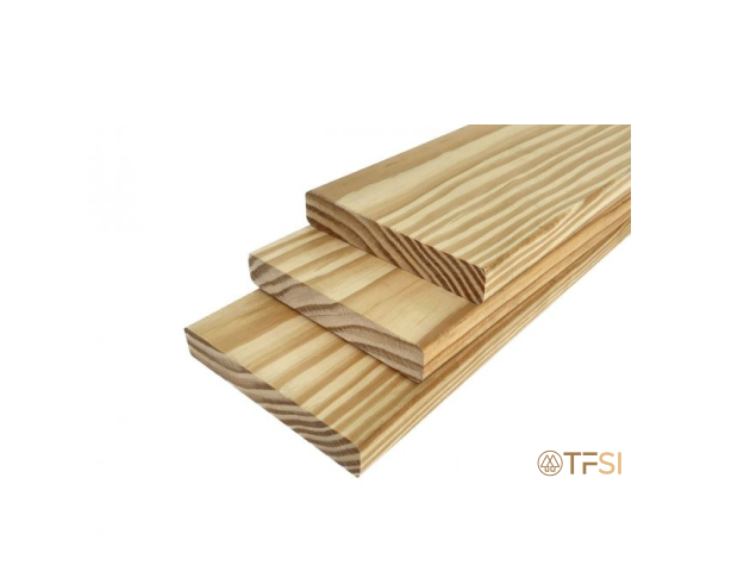
Southern Yellow Pine (Pressure-Treated)
Pressure-treated for improved durability and resistance to decay, this material is suitable for outdoor uses such as siding, fences, decking, soffits, and garden structures.
Western Red Cedar
Lightweight with a natural aroma, Western Red Cedar offers excellent resistance to decay and is widely used in both interior and exterior applications.
European Spruce
With a light yellow-white tone and visible knots, European Spruce is a popular choice for Nordic-style interiors that emphasize brightness and simplicity.
Japanese Hinoki (Cypress)
A premium wood species known for its straight grain and pleasant fragrance. Often used in temples, traditional architecture, and high-end interiors.
European Red Pine (Scots Pine)
Featuring finer grain and better dimensional stability compared to Yellow Pine, this species is suitable for structural use, interiors, furniture, DIY projects, and paneling applications.
Cypress (Juniper)
Characterized by tight grain and strong durability, this wood is suitable for both construction and furniture. Its color ranges from pale yellow to reddish-brown, offering natural visual contrast.
North American Red Oak
Known for strength and wear resistance, Red Oak supports a wide range of surface finishes, including smoked and brushed effects, making it ideal for residential and commercial interiors.
North American White Ash
Strong, stable, and evenly textured, White Ash accepts stains and finishes well, creating refined surfaces with minimal deformation.
For those who value a natural wood scent, species such as Japanese Hinoki, Western Red Cedar, and Lawson Cypress are excellent choices for enhancing the sensory experience of a space.
Read More
 Why Low-Formaldehyde Materials Matter in Healthy Homes
 Square Timber: A Practical Guide for Structural and Interior Use
Related Product