


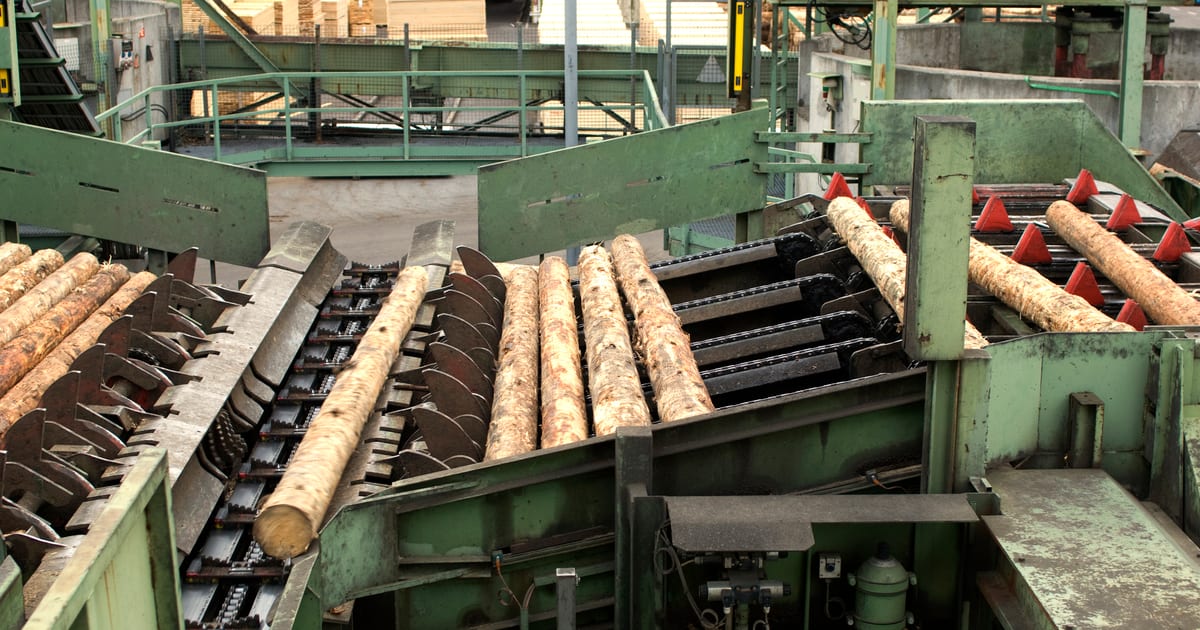
The true value of a log lies not in its size, but in how it is graded and processed.
Contents :
1. The Evolution of the Sawmill Industry
2. Timber Grading and Market Value
3. Turning Timber into Data
4. Advanced Scanning and Digital Modeling
5. The Role of AI in Timber Processing
6. Maximizing Resource Efficiency
7. Smart Material Selection Starts at the Source
The Evolution of the Sawmill Industry
Traditionally, sawmills depended on skilled workers with years of experience to decide how to cut each log. These decisions—such as avoiding knots or maximizing usable material—were based on human judgment. While effective, this approach often lacked consistency and efficiency.Today, sawmills have transformed into highly advanced operations. From early mechanical systems to modern facilities equipped with X-ray scanning and AI-based analysis, the process has become data-driven. Cutting is no longer just a physical task—it is a calculated decision based on detailed information.
Timber Grading and Market Value
Before processing begins, timber is evaluated according to grading systems that determine its market value.
For softwood, grading typically depends on the number and distribution of knots, categorized into levels such as Grade A, B, and C. The lower trunk, which contains fewer defects, is considered higher grade, while upper sections tend to have more knots.
For hardwood, systems like NHLA grading classify wood based on clear yield. Premium grades such as FAS are used for high-end furniture, while No.1 Common and No.2 Common are more suitable for structural or secondary uses.
These classifications directly influence cutting strategies and final applications.
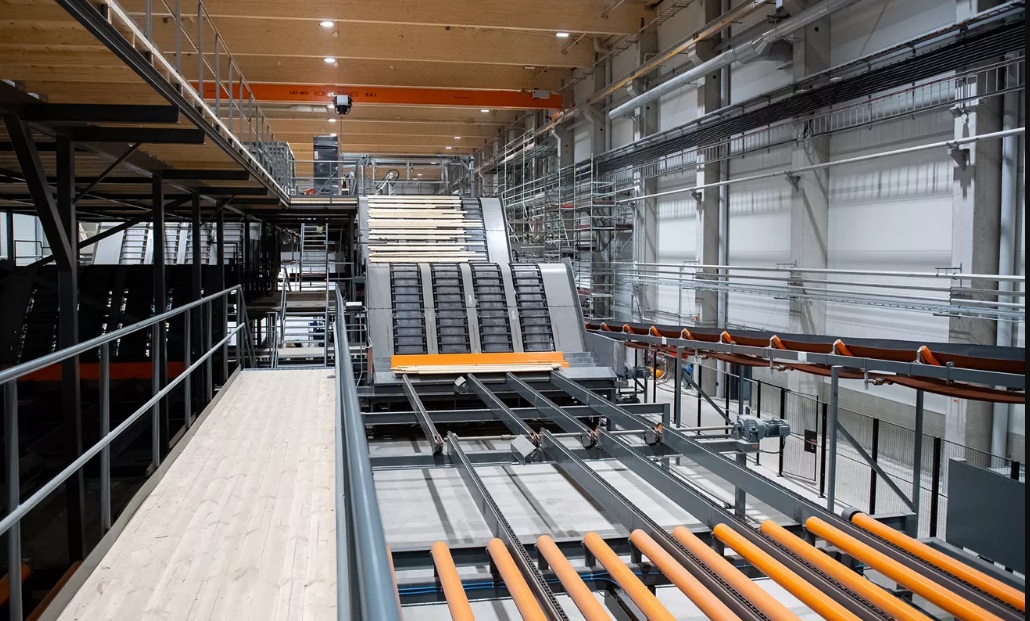
In modern sawmills, logs go through a fully automated workflow designed for efficiency and precision. The process typically includes:
- • Removing bark to protect equipment and improve cutting accuracy
- • Using sensors to analyze dimensions and shape
- • Cutting logs into standardized forms
- • Trimming out defects
- • Sorting materials by size and grade
At this stage, timber is no longer treated as raw material alone—it becomes a set of measurable data used to guide production decisions.
Advanced Scanning and Digital Modeling
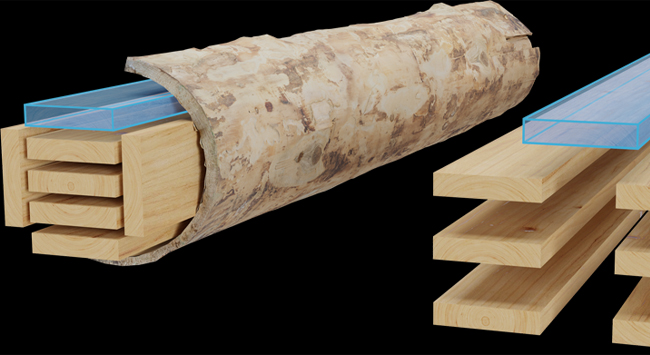
A major driver of this transformation is 3D laser scanning technology, which creates accurate digital models of each log.
These systems capture key characteristics such as diameter, curvature, and surface conditions. When combined with X-ray scanning, internal features like knots, cracks, and density variations can also be detected.
Additional technologies, including LiDAR and image recognition, allow both surface and internal defects to be identified with high accuracy. The system can then simulate multiple cutting options and select the one that delivers the highest economic value.
This process is often compared to a medical CT scan—providing a complete understanding of each log before processing begins.
The Role of AI in Timber Processing
Artificial intelligence plays a key role in analyzing and optimizing timber value. By learning from large datasets, AI systems can identify defects and predict the outcome of different cutting strategies.
In some cases, sawmills that have adopted AI-driven systems have improved material yield by up to 25%, while also reducing raw material waste.
This shift marks a significant change in the industry—from focusing on output volume to focusing on value optimization. Each cut is now based on precise calculations rather than estimation.
Maximizing Resource Efficiency
With increasing pressure on global forest resources, the industry has shifted toward using materials more efficiently.
Modern sawmills aim to utilize nearly every part of the log:
- • Wood chips are used in pulp production
- • Bark can be converted into biomass energy or landscaping materials
- • Offcuts are processed into engineered wood products such as OSB (Oriented Strand Board)
This near-zero-waste approach reflects a more responsible and sustainable use of natural resources.
Smart Material Selection Starts at the Source
Every piece of timber—its color, grain, and structural performance—is the result of a series of informed decisions, from grading to cutting.
Understanding how wood is processed is essential to selecting the right material for each application.
At bestwood, we believe that professional timber selection begins with responsible sourcing and deep industry knowledge. We are more than a supplier—we are your wood consultant and long-term partner.
From structural timber and decorative materials to specialty panels, from FSC-certified wood to custom sizing solutions, bestwood provides complete and reliable wood solutions.
Read More

Related Product


Source :
https://www.purityfamily.com.tw/%E6%9C%A8%E6%9D%90%E7%AD%89%E7%B4%9A/
https://www.americanhardwood.org/en/american-hardwood/grading-sawn-lumber/the-grades?region=eu
https://www.youtube.com/watch?v=zH6Lg9D1C34
https://www.youtube.com/watch?v=b6P3Ef-vlcc
https://www.purityfamily.com.tw/%E6%9C%A8%E6%9D%90%E7%AD%89%E7%B4%9A/
https://www.1120.com.tw/product/detail564
https://www.jsheld.com/insights/articles/sawmills-technological-advances-current-code-environmental-regulations-example-claims-evaluations
https://www.lesprom.com/de/news/Mets%25C3%25A4_Fibre_introduces_world%25E2%2580%2599s_most_modern_sawmill_in_Rauma_Finland_104162/ https://www.finnos.fi/en/news/more-efficient-data-to-upm-kaukas-with-finnos-fusion
https://zh-tw.woodandpanel.com/%E4%BC%8D%E5%BE%B7%E6%96%B0%E8%81%9E/%E6%96%87%E7%AB%A0/smarti%E5%85%AC%E5%8F%B8%E5%AE%89%E8%A3%9D%E6%96%B0%E5%9E%8Bilog-X%E5%85%89%E6%8E%83%E6%8F%8F%E5%99%A8%E4%BB%A5%E6%8F%90%E9%AB%98%E6%8E%83%E6%8F%8F%E7%B2%BE%E5%BA%A6/
https://www.yoshidaseizai.co.jp/column/about_rank.html