


In a modern interior space, materials often define the atmosphere. Imagine a solid concrete dining table paired with OSB panels—the contrast softens the industrial tone while adding warmth and texture. The layered strands of OSB create a natural visual rhythm, blending strength with artistic expression. This balance between raw material and thoughtful design reflects a deeper understanding of space, turning everyday environments into meaningful living experiences.
Contents :
1. What is OSB (Oriented Strand Board)?
2. Applications of OSB
3. Advantages and Limitations of OSB
4. Low Formaldehyde Performance
5. A Material for Modern Design and Sustainable Use
What is OSB (Oriented Strand Board)?
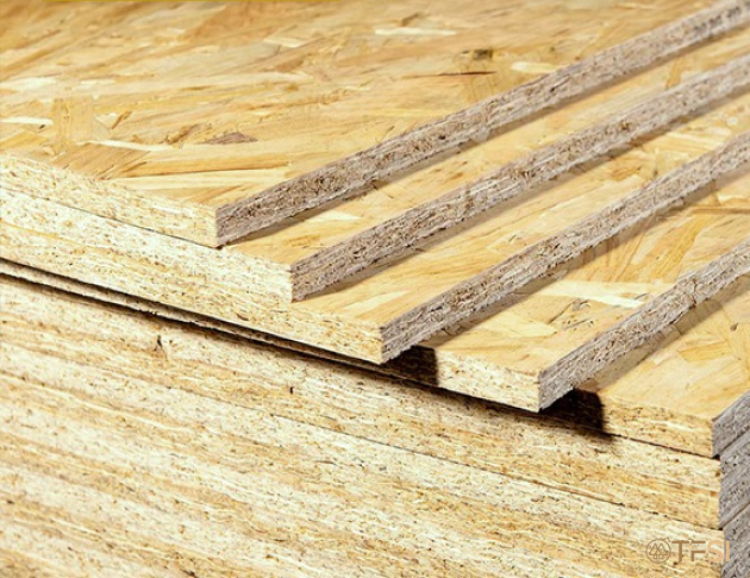
OSB, short for Oriented Strand Board, is an engineered wood panel widely used in both construction and interior applications. It is produced by cutting logs into thin strands, which are then combined with resin and wax before being pressed under high temperature.
During manufacturing, the wood strands are arranged in specific directions—typically in cross-oriented layers—to increase strength and stability. This structure allows OSB to achieve strong load-bearing performance while using less adhesive compared to plywood or other laminated boards.
As a result, OSB offers excellent resistance to bending, warping, and deformation, making it a reliable structural material. At the same time, its natural texture and layered appearance give it a distinctive look, making it suitable for modern design applications such as walls, ceilings, and flooring.
OSB is widely used across different industries due to its strength, cost efficiency, and versatility.
Common applications include:
- • Packaging materials and industrial crates
- • Structural panels in construction
- • Interior wall cladding and partitions
- • Ceilings and flooring systems
- • Decorative surfaces in commercial spaces
Its combination of structural performance and visual appeal makes it suitable for both functional and design-focused uses.
Advantages and Limitations of OSB
- Structural Strength and Decorative Value
OSB is designed with a multi-layer structure that provides high density and strong internal bonding. This gives it excellent load-bearing capacity while also creating a unique surface pattern that is often used as a design feature in modern interiors.
- Moisture Resistance
OSB panels made with MDI adhesive offer good resistance to moisture and can maintain structural performance in humid environments. However, they are not recommended for areas with direct or prolonged water exposure.
- Environmentally Friendly Composition
Because of its strand-based structure, OSB requires less adhesive than many other engineered wood products. TFSI’s OSB products use MDI glue, which releases almost no free formaldehyde after curing, making it a safer and more environmentally responsible option.
Standard OSB panels often include finer wood particles on the outer layers, creating a smoother surface that is suitable for coating, laminating, or additional finishing processes.
Low Formaldehyde Performance
The OSB panels supplied by TFSI are designed with strict environmental standards in mind.
- • Maximum formaldehyde emission:0.012 ppm
- • Lower than typical ambient air levels in many North American cities (approx. 0.06 ppm)
- • Complies with Taiwan CNS-2215 F1 grade standard
- • Certified by the Bureau of Standards, Metrology and Inspection (BSMI), Ministry of Economic Affairs
This ensures a healthier and safer material choice for both residential and commercial applications.
A Material for Modern Design and Sustainable Use
With its balance of strength, efficiency, and design flexibility, OSB has become a key material in both construction and interior design. It represents a practical approach to sustainability—making full use of wood resources while delivering reliable performance.
At TFSI, we believe that the right material creates better spaces. By combining structural reliability with environmental responsibility, OSB continues to support modern design and manufacturing needs.
Read More

Related Product
References:
https://www.pinterest.com/pin/529524868707138223/