

Contents :
1. The Baobab in The Little Prince
2. A Natural Water Source in Dry Lands
3. A Tree That Sustains Communities
4. The Sunland Big Baobab Experience
5. TFSI: Your Wood Partner
The Baobab in The Little Prince
In the story The Little Prince, baobab trees are described as dangerous plants that grow uncontrollably if left unattended. They symbolize neglect and the consequences of ignoring small problems.
In reality, however, the baobab tree tells a very different story. Rather than being destructive, it plays a vital role in supporting life. With its massive trunk and strong presence, the tree stands as a symbol of resilience in challenging environments.
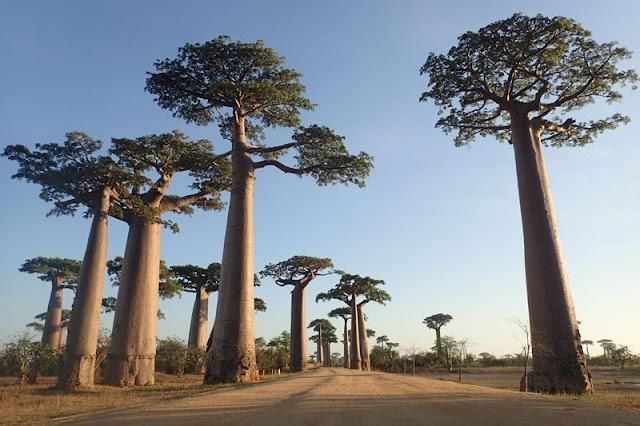
During the dry season, its leaves fall and its branches stretch outward in twisted forms, creating the impression of roots reaching into the sky. This unique appearance has earned it the nickname “the upside-down tree.”
A Natural Water Source in Dry Lands
Baobab trees are commonly found in regions such as Africa, Madagascar, and parts of Australia—areas known for dry and demanding climates.
One of their most remarkable features is their ability to store water within their large trunks. In some cases, people can access this stored water by opening sections of the tree, making it function like a natural reservoir.
In environments where water is limited, the baobab becomes more than just a tree—it becomes a reliable source of life, much like an oasis in the desert.
A Tree That Sustains Communities
The baobab tree is closely connected to everyday life in many regions.
- • Its leaves, fruits, and seeds can be consumed
- • Its bark can be processed into rope and fiber
- • Its fruit can be used to produce powder and oil
In many African and Madagascan communities, baobab trees serve as gathering points for social and cultural activities. The trunk may also be used for storing water or food supplies.
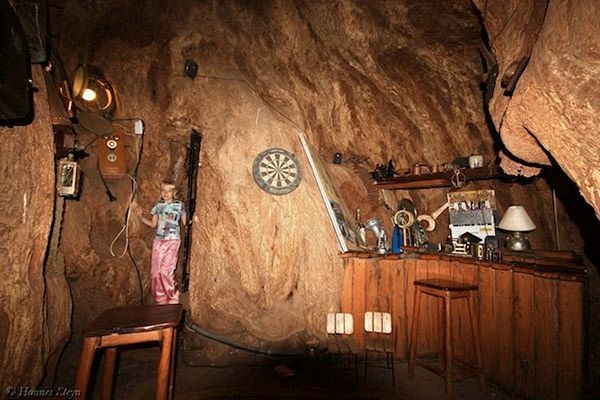
As these trees age, their interiors often develop large hollow spaces. These natural cavities are then adapted for practical uses, demonstrating the versatility and long-term value of the tree.
The Sunland Big Baobab Experience
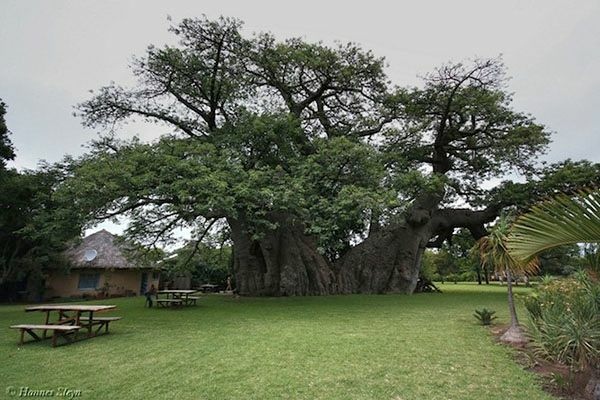
Located in Limpopo Province, South Africa, the Sunland Big Baobab is one of the most famous baobab trees in the world.
- •Height: Over 22 meters
- •Trunk circumference: Approximately 47 meters
- •Estimated age: More than 6,000 years
It is considered one of the widest and oldest baobab trees known today.
What makes it truly exceptional is its interior. The natural hollow space inside the tree has been transformed into a fully functional bar. Visitors can enter through a small doorway into a space equipped with lighting, ventilation, and a bar counter, accommodating around 15 people.
This unique blend of natural structure and human creativity has made it a globally recognized attraction.
TFSI: Your Wood Partner
The baobab tree takes thousands of years to reach its full potential, supporting ecosystems, communities, and cultural traditions along the way. For designers and businesses, it offers a clear message:
true value is built over time, through expertise, patience, and respect for materials.
At TFSI, we believe that every successful project begins with the right material selection. We are not only a supplier—we are your wood consultant and long-term partner.
Read More
Related Product


Source :
https://www.facebook.com/media/set/?
set=a.514846228627745.1073741966.406181396160896&type=1&stream_ref=10 https://www.yahoo.com/%E3%80%90-%E9%A9%9A%E5%A5%87%E6%99%AF%E9%BB%9E-%E3%80%91-6000%E5%B9%B4%E6%A8%B9%E6%B4%9E%E8%AE%8A%E9%85%92%E5%90%A7-%E7%A5%9E%E7%A7%98%E5%A5%87%E7%89%B9%E7%9A%84%E9%85%92%E5%90%A7%E7%89%B9%E8%BC%AF-092038198.html
https://dq.yam.com/post/16087
https://vocus.cc/article/67842bcffd8978000149d253