


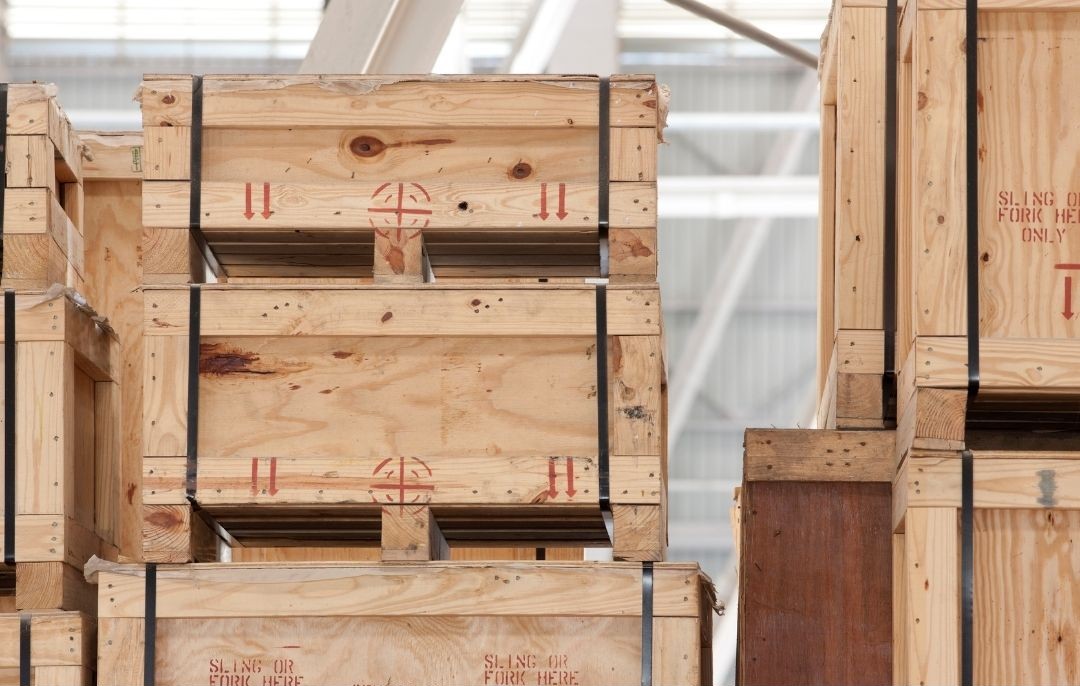
Before goods arrive at their destination, they often travel long distances through challenging conditions—vibration, humidity, stacking pressure, and extended storage. Packaging serves as the first layer of protection, ensuring that products remain safe and intact throughout the journey.
Within the timber sector, there is a specialized field dedicated to this purpose: the wood packaging industry. Its role is not just to build crates, but to secure products and support efficient global logistics.
Contents :
1. Why Wood is Widely Used in Packaging
2. Global Standards: Fumigation and Heat Treatment
3. Why Wood Packaging Remains Essential
4. Common Types of Wooden Packaging
5. Choosing the Right Material for Export Packaging
6. TFSI | Expertise × Transparency × Reliability
Why Wood is Widely Used in Packaging
When products leave the factory, packaging becomes their primary protection. Among various materials, wood continues to be a preferred choice for several reasons:
Strength and Impact Resistance
Wood naturally absorbs shock and withstands pressure, making it suitable for long-distance and heavy-duty transport.
Flexible Customization
Every product has different dimensions and weight requirements. Wood can be easily cut and assembled to create tailored packaging solutions.
Cost Efficiency and Sustainability
Compared to metal and plastic, wood is more cost-effective. It is also recyclable and aligns with environmental considerations.
Wood packaging is not just about protection—it reflects reliability and responsible material use.
Global Standards: Fumigation and Heat Treatment
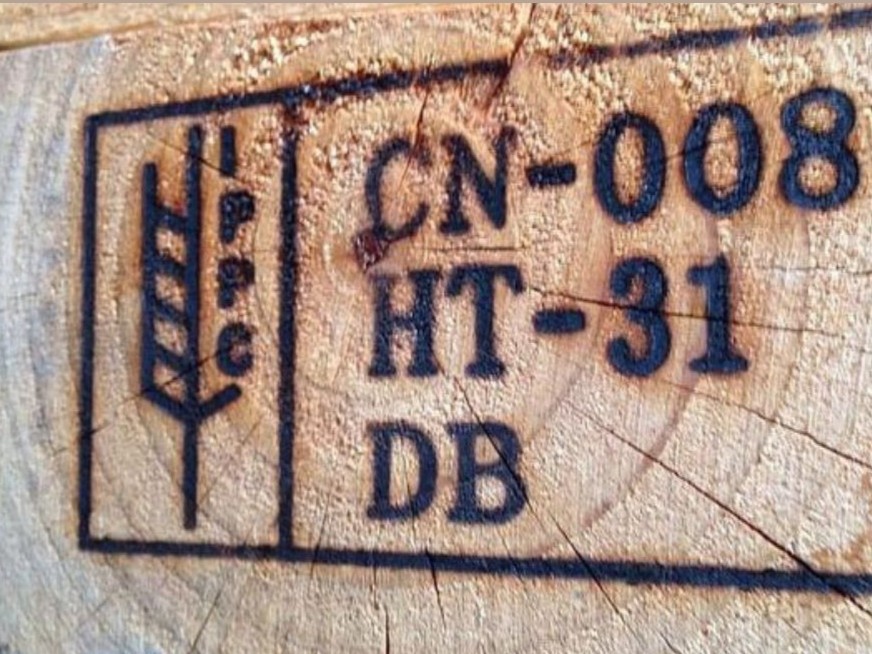
Wood packaging used in export must comply with international regulations. According to the International Plant Protection Convention (IPPC), all wood materials used for crating, blocking, or support must undergo treatment.
Fumigation or heat treatment is used to eliminate insects and microorganisms within the wood, preventing cross-border pest contamination.
Once treated, the material is marked with the IPPC stamp, confirming compliance with global phytosanitary standards. This process protects both international trade and agricultural ecosystems.
Why Wood Packaging Remains Essential
Although alternatives such as cardboard, plastic, and metal are available, wood remains the most reliable solution for medium to heavy cargo.
- • Heavy machinery requires strong load-bearing and shock protection
- • Sensitive electronics need both impact resistance and moisture control
By combining wood with materials like foam or protective films, packaging can achieve both strength and precision. This adaptability makes wood difficult to replace in global logistics systems.
Common Types of Wooden Packaging
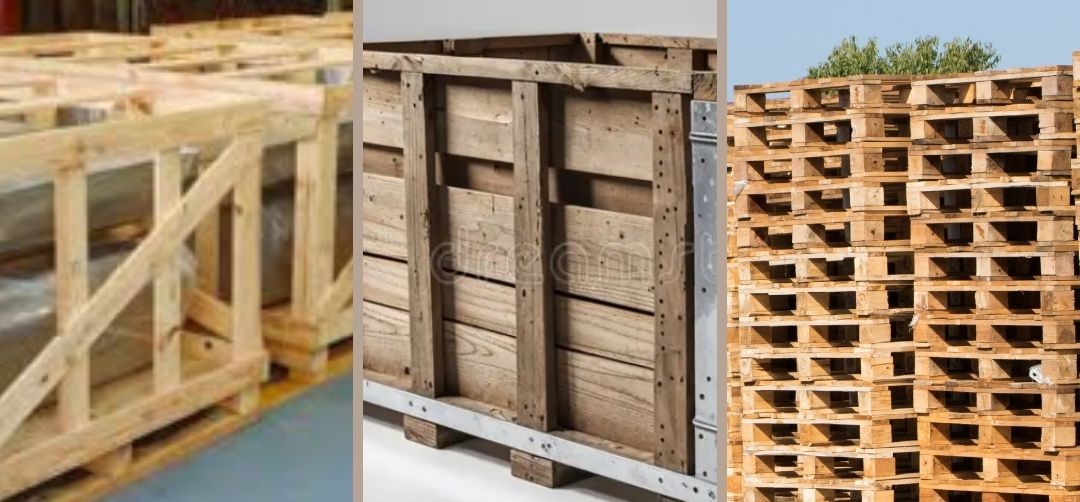
Different applications require different packaging designs:
Slatted Crates
A cost-effective option made from spaced wooden strips. Suitable for goods that do not require full enclosure or high protection.
Heavy-Duty Crates
Fully enclosed wooden boxes designed to protect against moisture, dust, and external impact. Ideal for industrial equipment and large machinery.
Pallets
Flat platforms that allow easy handling with forklifts and pallet jacks. Designed to support heavy loads and withstand repeated use.
Each type serves a specific function, demonstrating the versatility of wood packaging solutions.
Choosing the Right Material for Export Packaging
Wooden export packaging is generally divided into two main categories:
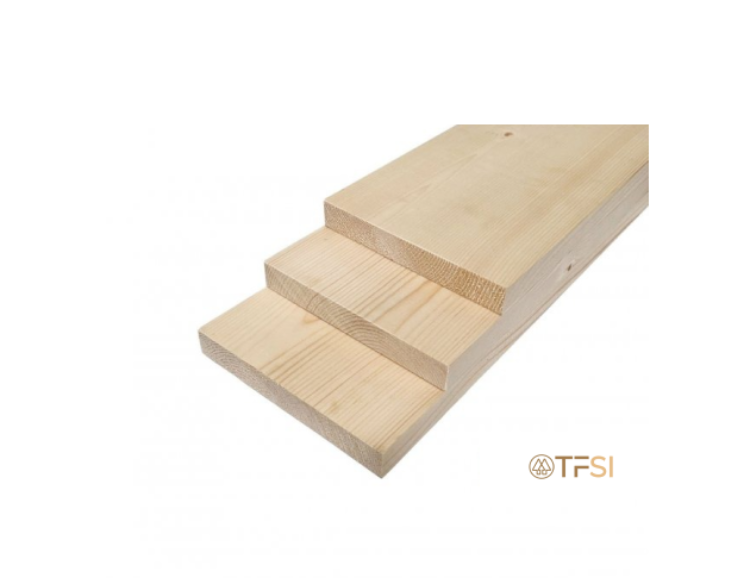
Solid Wood Crates
Made from natural timber and treated through fumigation or heat processes. They offer strong structural performance and can often be reused.
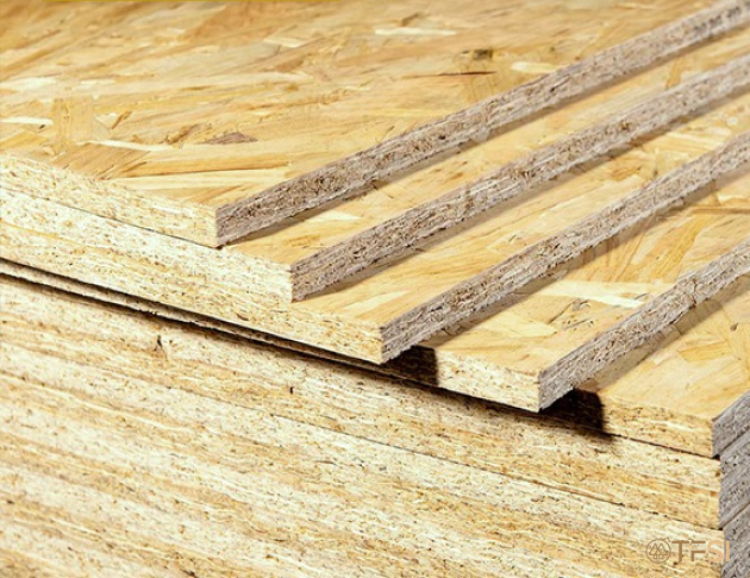
Plywood Crates
Manufactured from layered veneers bonded under heat and pressure. These crates typically do not require fumigation and are widely accepted in international shipping.
Material selection depends on destination regulations, cargo weight, and performance requirements. Professional guidance is key to making the right decision.
TFSI | Expertise × Transparency × Reliability
In the wood packaging industry, precision in both material selection and processing is critical. At TFSI, we go beyond supplying materials—we provide complete wood packaging solutions.
Our services include:
- • Professional recommendations based on cargo type and logistics needs
- • Custom cutting and processing for accurate fit and performance
- • A wide range of materials, including solid wood, plywood, and engineered boards
Read More

Related Product
Source :
https://reurl.cc/lY6NgA
https://www.hcsp-wood.com.tw/index.html
https://racking.com.tw/pallet/