



The future of surfing may lie in returning to the materials that first connected people with the sea.
Contents :
1. The Origins of Wooden Surfboards
2. When Synthetic Materials Took Over
3. Reimagining Surfboards Through Circular Design
4. Creating Surfboards Without Cutting Down Trees
5. The Craftsmanship Behind Wooden Boards
The Origins of Wooden Surfboards
Surfing has long been associated with freedom, adventure, and a deep connection with the ocean. Yet its origins extend far beyond modern beach culture.
In ancient Hawaii, surfing was considered a sacred activity that reflected social traditions and spiritual beliefs. The choice of surfboard material even carried cultural significance.
Hawaiian royalty traditionally rode boards crafted from wiliwili wood, valued for its light weight and excellent buoyancy, allowing riders to catch waves earlier and maintain speed on larger swells. Commoners, on the other hand, used boards made from koa wood, a denser native hardwood.
Although the shapes of the boards were often similar, the selection of timber represented status and identity within Hawaiian society.
When Synthetic Materials Took Over
As manufacturing technologies evolved, wooden surfboards gradually gave way to synthetic alternatives.
By the mid-20th century, surfboards constructed from polyurethane (PU) foam cores and fiberglass became the industry standard. Their lighter weight, lower production costs, and ability to be mass-produced helped surfing spread across the globe.
However, convenience came at an environmental price.
Petroleum-based surfboards require chemical-intensive manufacturing processes and are difficult to recycle at the end of their life cycle. Discarded boards often accumulate in landfills, where they contribute to long-term environmental concerns.
Ironically, while these materials helped more people embrace the ocean lifestyle, they also highlighted the growing challenge of protecting marine ecosystems.
Reimagining Surfboards Through Circular Design
Increasing awareness of ocean pollution has inspired designers and innovators to explore more sustainable alternatives.
In the United Kingdom, a team of developers spent years creating surfboards made primarily from renewable resources. One of the key materials they selected was balsa wood, a fast-growing species known for its exceptional lightness.
Because balsa requires periodic pruning during cultivation, portions of the harvested material can be repurposed rather than discarded. Through years of testing and refinement, the team produced a durable surfboard capable of handling real surfing conditions while relying largely on biodegradable components.
Even the resin system was developed from plant-based ingredients, demonstrating that performance and environmental responsibility can coexist.
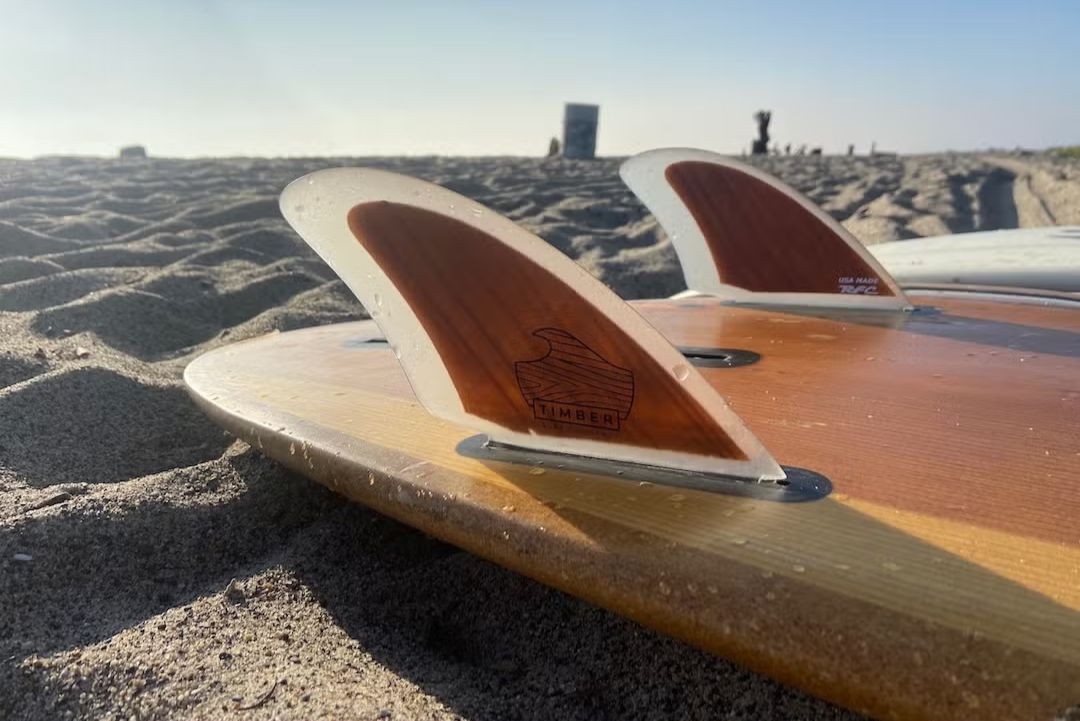
A similar philosophy emerged in California through the work of Ryan Lynch, a former Tesla design engineer who later founded Timber Surf Co.
Lynch questioned the contradiction within surfing culture: People immerse themselves in nature while riding equipment that may ultimately harm the environment they cherish.
His company addresses this challenge by incorporating reclaimed redwood veneers into surfboard construction. Recycled EPS foam cores provide structural support, while the reclaimed timber forms a striking outer layer that gives each board its own unique appearance.
Equally important, Timber Surf Co. collaborates with manufacturing partners to recover and reuse leftover materials, reinforcing the principles of a circular economy.
The result is a product that reflects both innovation and environmental awareness.
The Craftsmanship Behind Wooden Boards
The construction of a wooden surfboard combines digital technology with traditional woodworking skills.
Design begins with computer modeling, where the board's dimensions and hydrodynamic characteristics are carefully planned.
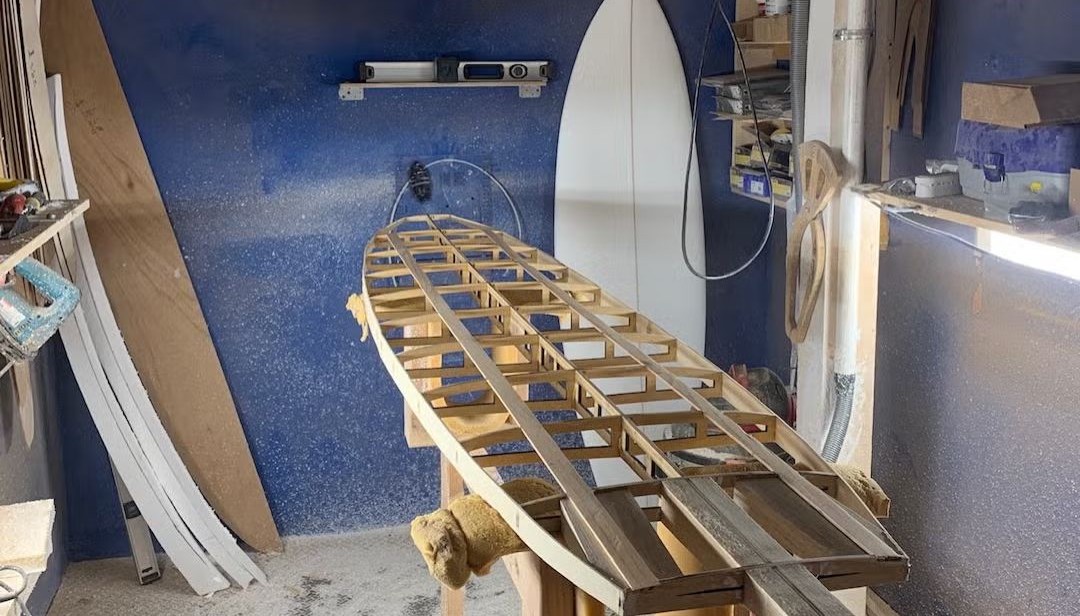
An internal framework is then assembled, often resembling the structure of an aircraft wing. A central stringer provides longitudinal strength, while supporting ribs establish the board's overall shape.
Woodworking remains one of the most demanding stages of production. Panels must be bent into precise curves under controlled conditions, while narrow timber strips used along the rails are softened through steam before being shaped around the nose and tail.
Too little flexibility may cause fractures; too much pressure can compromise the final form.
After assembly, the board undergoes pressing, curing, shaping, and repeated sanding until the natural grain patterns emerge. Each finished surfboard showcases the beauty of wood alongside the precision of skilled craftsmanship.
Surfing has evolved from the ceremonial traditions of ancient Hawaii into a global lifestyle embraced by millions. Yet the essence of the sport remains unchanged—a profound relationship between people and the ocean.
Choosing materials with lower environmental impact allows that relationship to continue in a more responsible way.
Sustainability is not about returning to the past; it is about applying today's knowledge to protect tomorrow's resources.
At TFSI, we believe that material selection influences far more than product performance—it shapes the future of our environment. As your timber consultant and global supply partner, we provide FSC-certified materials, tailored processing solutions, and professional recommendations across a wide range of applications. From structural timber and decorative products to specialty wood solutions, TFSI helps businesses transform sustainable ideas into practical realities.
TFSI — Global Timber Solutions for a More Sustainable Future.
Read More


Related Product

Source :
https://www.6gui.com.tw/product-detail-3793300.html
https://muxin.tw/what-is-wood-work/
https://www.lanhome558.com/news/details.php?id=497&group_id=98&second_id=4879
https://hand-made.com.tw/手作空間-設計/
https://clearstyle.com.tw/blog/1046