


If you've ever purchased North American lumber, you've probably come across terms like 2×4, 2×6, or specifications such as 38 × 89 mm and 38 × 140 mm. At first glance, these numbers can be confusing. Why doesn't a 2×4 piece of lumber actually measure 2 inches by 4 inches?
The answer lies in the way dimension lumber is manufactured and standardized.
Contents :
1. Nominal Sizes and Unit Conversion
2. What Is 2×4 Framing?
3. Why Finished Lumber Is Smaller
4. Understanding Lumber Sizes Makes Better Material Selection
Nominal Sizes and Unit Conversion
Dimension lumber in North America is traditionally identified by its nominal size, which represents the board's dimensions before drying and finishing.
For reference:
- • 1 inch = 25.4 mm (2.54 cm)
- • 2 × 4 = approximately 50.8 × 101.6 mm
- • 2 × 6 = approximately 50.8 × 152.4 mm
These measurements describe the lumber immediately after it is rough sawn from the log—not the finished product that reaches the marketplace.
What Is 2×4 Framing?
The 2×4 framing system, often called platform-frame construction, is one of the most widely used building methods in North America and has also become popular in countries such as Japan.
The system uses standardized framing lumber as the primary structural material for walls, floors, and roofs. It is commonly combined with structural panels such as OSB or plywood to create buildings that are strong, energy efficient, and resistant to earthquakes and wind loads.
Its simple construction method, reliable structural performance, and efficient material usage have made 2×4 framing the preferred choice for residential construction worldwide.
Why Finished Lumber Is Smaller
When you purchase dimension lumber, you'll notice the finished sizes are smaller than the nominal dimensions.
For example:
|
Nominal Size |
Actual Finished Size |
|
2 × 4 |
38 × 89 mm (3.8 × 8.9 cm) |
|
2 × 6 |
38 × 140 mm (3.8 × 14.0 cm) |
This reduction occurs because the lumber undergoes several manufacturing processes after being cut from the log.
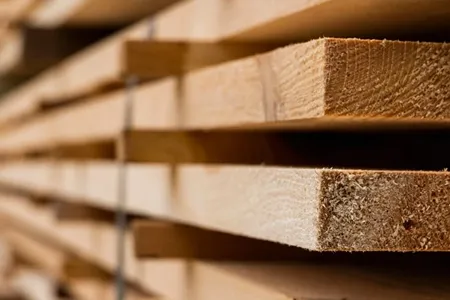
First, the wood is kiln dried to reduce its moisture content. As moisture leaves the wood fibers, natural shrinkage occurs. The boards are then planed on all four sides to create smooth, consistent surfaces and precise dimensions that meet industry standards.
The final product is therefore smaller than the original rough-sawn size but offers improved stability, uniformity, and ease of construction.
Understanding Lumber Sizes Makes Better Material Selection
Knowing the difference between nominal dimensions and actual finished sizes helps architects, builders, manufacturers, and importers make more accurate design calculations and purchasing decisions.
Whether you're sourcing framing lumber for structural construction or selecting timber for manufacturing, understanding these industry standards reduces errors and improves project efficiency.
At TFSI, we provide professional timber solutions backed by reliable product specifications and international sourcing experience. From structural lumber and engineered wood products to customized processing services, we help customers choose the right materials for every application.
Read More
Related Product

References: