

Growing in some of the world’s coldest forest regions, larch stands apart from most conifers. Its unusual growth cycle and harsh natural environment give the timber its distinctive appearance and practical properties.
Contents :
1. A Forest That Turns Gold
2. Built for Extreme Cold
3. Natural Resistance to Decay
4. Where Is Larch Used?
5. The Savill Building
6. Larch and Sustainable Forestry
7. TFSI | Your Global Timber Solutions Partner
A Forest That Turns Gold
Most conifers are known for staying green throughout the year. Christmas trees, for example, remain green even during the cold winter months. Larch is different.
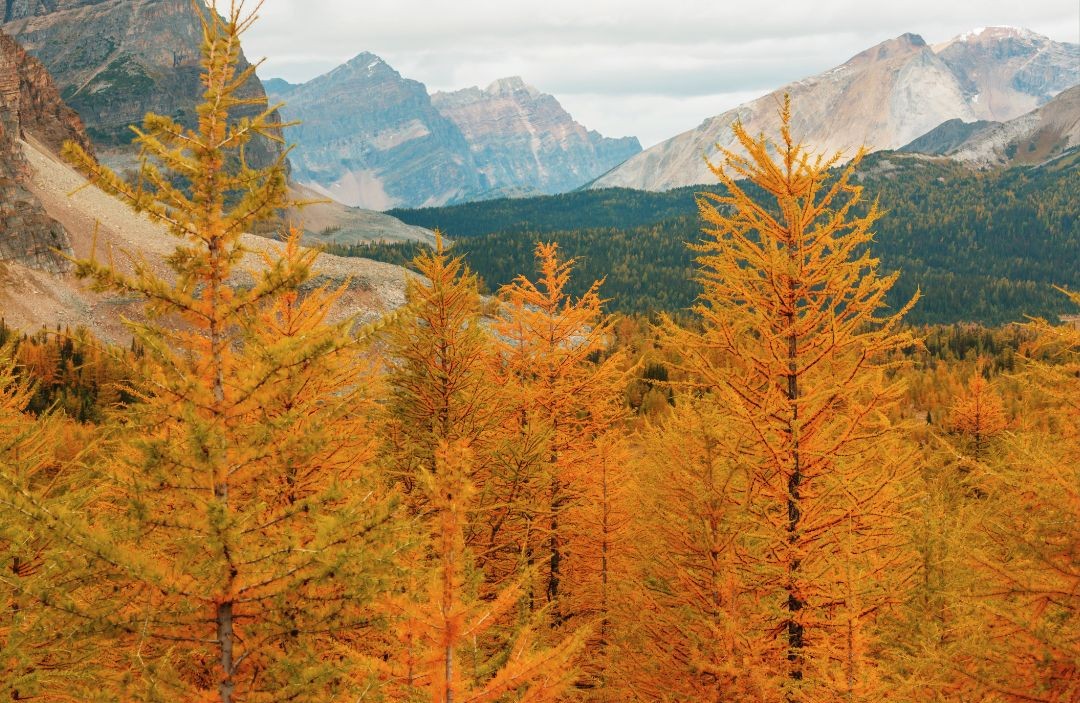
Although it is a conifer, larch is deciduous. As autumn arrives, its green needles gradually turn a brilliant golden yellow before falling completely in winter. The branches remain bare through the coldest months until new green needles emerge again in spring.
This rare characteristic creates the spectacular golden forests associated with larch and makes it an unusual member of the conifer family.
Built for Extreme Cold
Larch is naturally found across cold temperate and temperate regions and is recognized as one of the most cold-tolerant conifers. Some species are capable of surviving temperatures down to approximately -40°C.
Life in these demanding environments also influences the timber itself. Larch grows relatively slowly and develops closely spaced growth rings, contributing to its dense wood structure.
Its color can range from pale yellow and orange-yellow to rich golden brown. Together with its visible grain, these natural tones give larch a warm and distinctive character.
Natural Resistance to Decay
Larch is valued for more than its appearance. Its relatively dense wood structure, together with its natural resin and tannin content, contributes to its resistance to fungi, insects, and decay.
Its heartwood is also known for performing well under prolonged exposure to moisture.
A historical example can be found beneath Venice. Archaeological studies of the timber piles supporting parts of the city have identified larch and alder among the commonly used species. Many of these wooden foundations have remained underwater for centuries.
This demonstrates how the right timber, used under suitable conditions, can provide remarkable long-term performance.
Where Is Larch Used?
The combination of strength, durability, and attractive grain makes larch suitable for a broad range of applications.
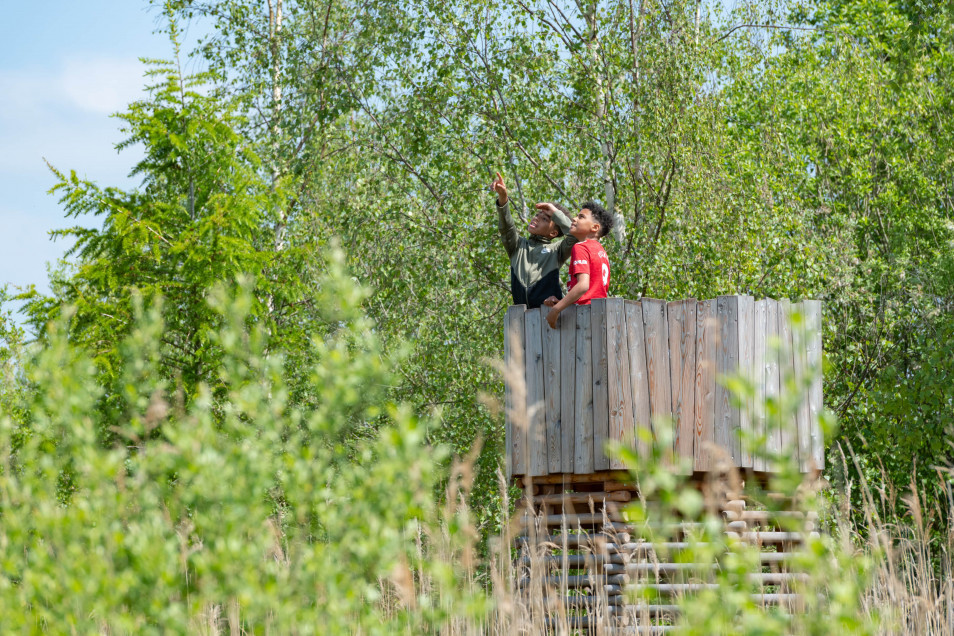
For architectural and landscape projects, it can be used for wall paneling, exterior cladding, decking, fences, terraces, garden furniture, and playground facilities. Larch has also traditionally been used in shipbuilding.
Its strong and durable heartwood also makes it suitable for structural applications, including agricultural and other timber buildings.
This versatility allows larch to move naturally between structural, architectural, and decorative uses.
The Savill Building
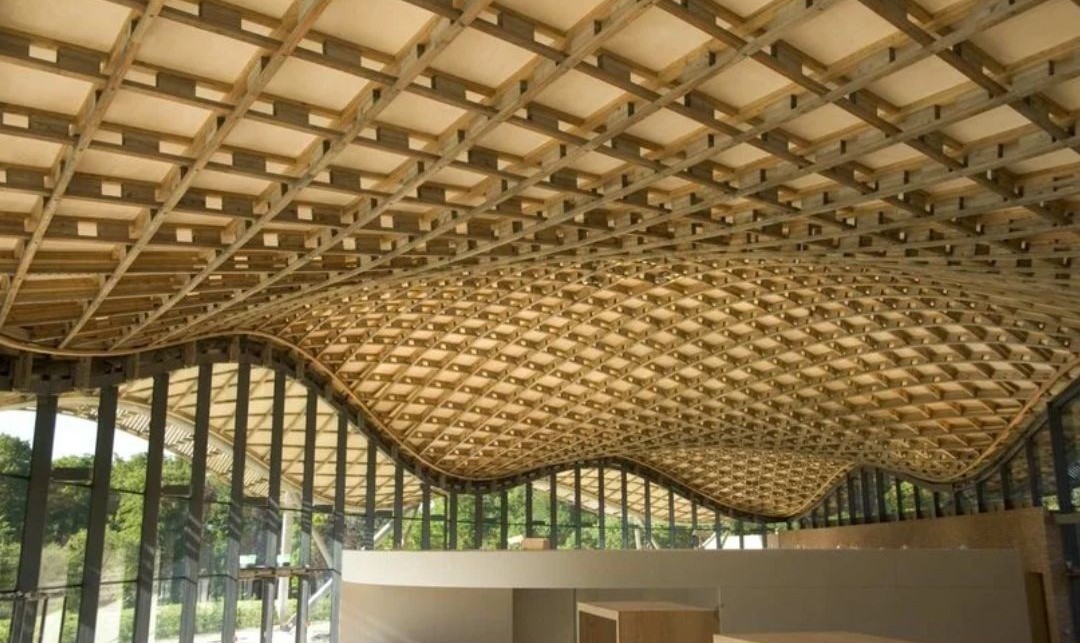
One well-known architectural example is the Savill Building at Windsor Great Park in England.
Its sweeping roof is formed by a timber gridshell made from numerous interwoven larch strips. Instead of functioning independently, the timber members support one another to create a continuous curved roof structure.
The project shows another side of larch: beyond being a naturally durable material, it can also become part of sophisticated engineered structures when combined with thoughtful design and construction technology.
Larch and Sustainable Forestry
Larch is also supported by large-scale plantation forestry in Siberia. In eastern regions alone, around one million hectares of commercially valuable larch plantations have been established.
When timber comes from responsibly managed forests and is supported by systems such as FSC certification, larch can offer a balance between long-term performance and responsible forest resource management.
At TFSI, we understand that selecting timber involves more than choosing a species based on appearance. The application, environment, processing requirements, and material source all need to be considered.
TFSI provides FSC-certified timber, professional material recommendations, and customized processing solutions for a wide range of requirements—from structural timber and decorative wood to specialty wood panels.
GET YOUR BEST WOOD FROM TFSI — The right timber starts with the right understanding.
Read More
Related Product

References:
https://en.wikipedia.org/wiki/Larch
https://www.bestwood.com/product_d.php?lang=tw&tb=1&id=595
https://logietimber.co.uk/wood-types/larch-3/
https://www.tandfonline.com/doi/full/10.1080/17480272.2025.2466104
https://duffieldtimber.com/the-workbench/buyers-guides/siberian-larch-facts-properties-durability-uses
https://www.researchgate.net/publication/43274799_The_Great_Siberian_Forest_Challenges_and_Opportunities_of_Scale
https://www.larchwoodcanada.com/
https://www.manufactum.com/larch-wood-c201006/
https://timberdevelopment.uk/case-studies/the-savill-building-windsor-great-park/
https://en.wikipedia.org/wiki/Savill_Building
https://timberplay.com/play-expertise/benefits-of-wooden-playgrounds