


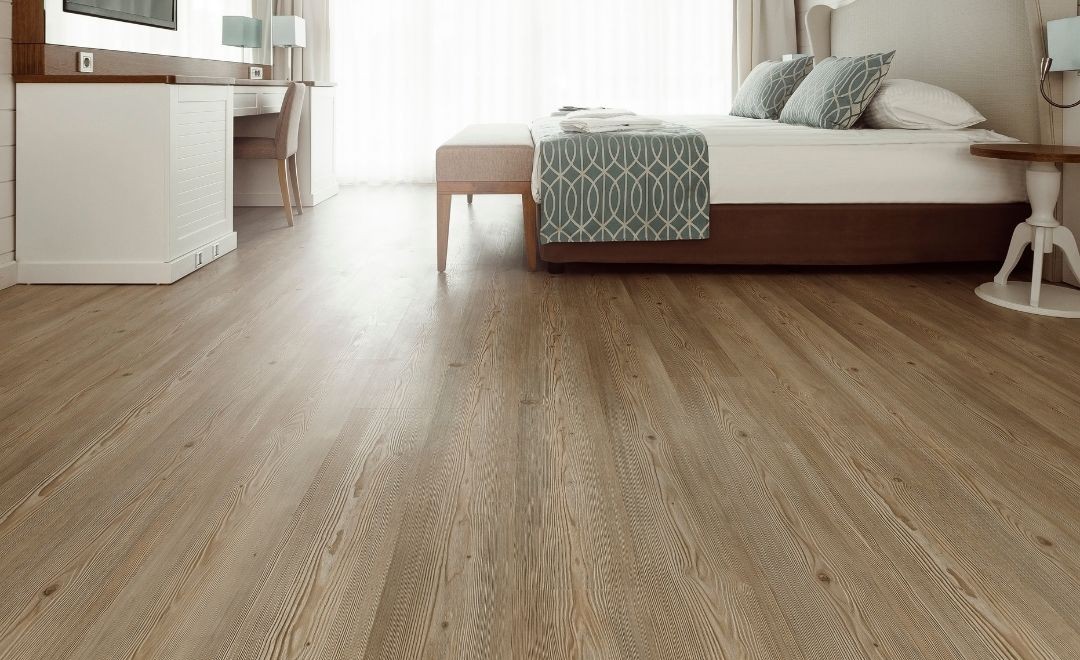
Wood naturally responds to moisture. Small gaps, expansion, and shrinkage can be normal changes rather than signs of poor-quality flooring.
Contents :
1. Why Does Wood Flooring Change Over Time?
2. Wood Naturally Responds to Humidity
3. Is Drier Wood Always Better?
4. Normal Seasonal Movement or a Flooring Problem?
5. Understanding Wood Starts with Understanding Moisture
6. TFSI | Your Professional Timber Solutions Partner
Why Does Wood Flooring Change Over Time?
Wood flooring may look completely even when first installed, but after some time, small changes can begin to appear.
You may notice wider spaces between individual boards, or some areas may become slightly raised and feel uneven underfoot. These changes can be more noticeable during rainy or humid seasons, especially around windows and other areas where moisture conditions change easily.
However, high humidity is not the only reason wood flooring changes. Very dry conditions can also affect the floor.
Both situations are connected to one important factor: moisture.
Wood Naturally Responds to Humidity
Unlike plastic or metal, wood is a natural material that continuously interacts with the surrounding air. When humidity changes, wood can absorb or release moisture.
💧 In humid conditions:
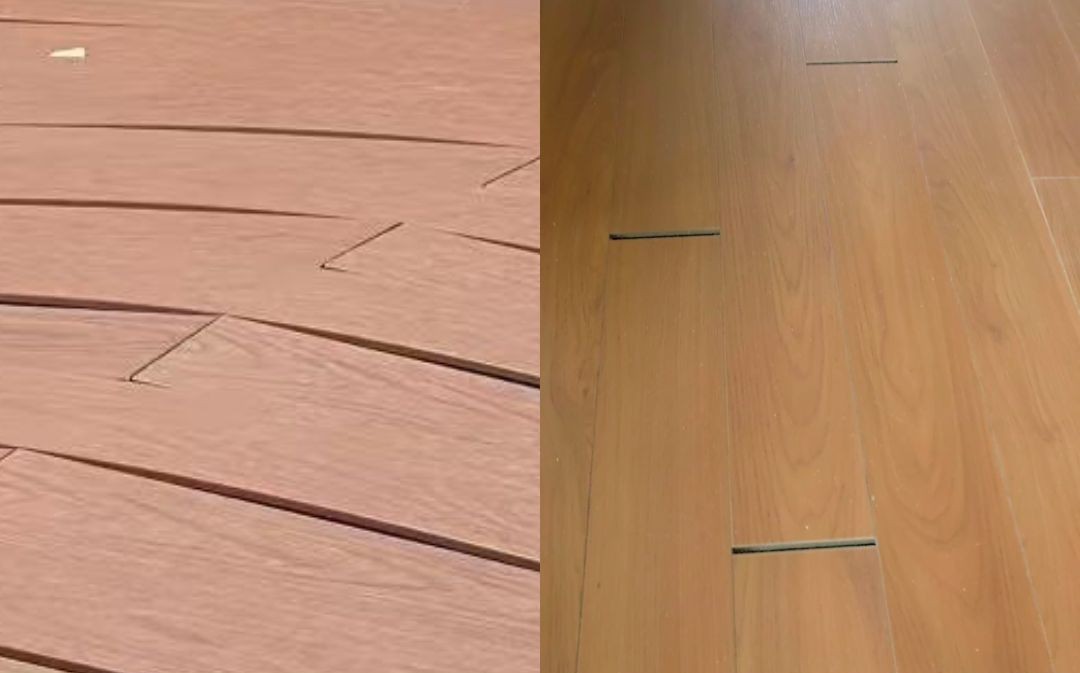
Wood absorbs moisture from the air. As its moisture content increases, the material expands. This may cause some floorboards to swell, rise, or become slightly uneven.
💧 In dry conditions:
Wood releases moisture into the surrounding air. As it dries, it shrinks, which can make the spaces between floorboards more visible.
This movement is a natural characteristic of wood.
Different seasons and environments create different moisture conditions. Flooring exposed to humid air near a window, for example, may react differently from flooring in an air-conditioned room or an area with strong sunlight and good ventilation.
For this reason, some movement in wood flooring should not automatically be considered a material defect.
Is Drier Wood Always Better?
Not always.
A lower moisture content does not automatically mean better wood. The more important factor is whether the moisture condition of the wood is suitable for the environment where it will actually be installed and used.
When wood moves from a humid environment into a much drier indoor space, it can lose moisture and shrink.
The opposite can also happen. Dry wood placed in a high-humidity environment can absorb moisture and expand.
Proper drying helps bring wood into a more stable condition. As a general reference, wood with a moisture content of approximately 19% or lower can be used in indoor environments where relative humidity remains below around 70%.
The goal is therefore not simply to make wood as dry as possible. It is to keep its moisture condition reasonably close to its actual service environment.
Normal Seasonal Movement or a Flooring Problem?
Seeing a gap does not necessarily mean your floor needs repair. The more useful question is whether the change is normal seasonal movement or an unusual condition that requires attention.
If small gaps or slight changes in floor level appear relatively evenly across the flooring and gradually improve once humidity returns to normal, they are usually part of the natural seasonal movement of wood.
However, some conditions deserve closer attention.
If one specific area rises much higher than the surrounding floor, unusual noises appear when walking, or the boards begin to crack, become damaged, or develop mold, there may be another cause.
You should also pay attention when the flooring does not return to normal after the surrounding humidity has remained stable for a period of time.
In these cases, the issue may be related to local moisture exposure or installation conditions, rather than the normal movement of wood alone. More serious cases may require the affected flooring to be removed and reinstalled.
We will discuss these flooring conditions and possible solutions in greater detail in another article.
Understanding Wood Starts with Understanding Moisture
Expansion, shrinkage, and changing gaps are all closely related to changes in the moisture content of wood.
Understanding this natural behavior makes it easier to choose suitable materials, plan installation conditions, and determine whether changes in a wood floor are normal or require further attention.
TFSI | Your Professional Timber Solutions Partner
From structural timber and decorative wood to specialty panels, FSC-certified timber, and custom-sized processing, TFSI provides practical wood solutions for different applications and project requirements.
Read More
Related Product

Reference :
https://www.cwcba-wqac.org.tw/forest-tech/index.php?action=knowledge-detail&id=4
https://today.line.me/tw/v3/article/8nXLKoq