


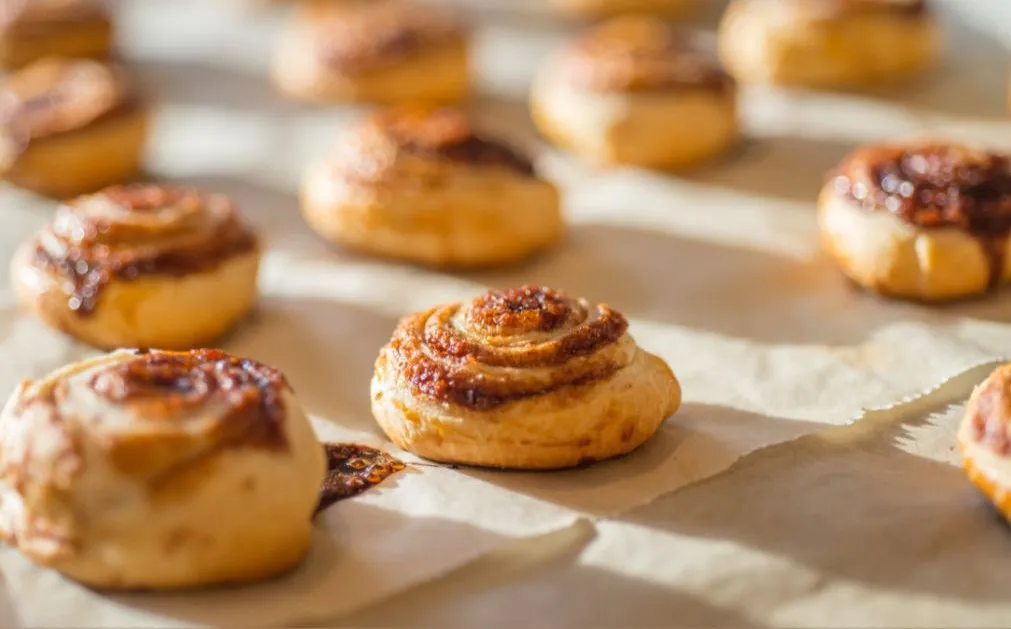
Cinnamon rolls, apple pies, coffee, and even savory dishes all have one thing in common: cinnamon can give them an instantly recognizable aroma.
But have you ever wondered where this familiar spice actually comes from?
Surprisingly, cinnamon is not a fruit, seed, or flower. It comes from the inner bark of the cinnamon tree. After the bark is harvested and dried, it naturally curls into the cinnamon sticks we recognize today.
So the next time you add cinnamon to your coffee or dessert, remember—you are enjoying one of the most interesting products that comes directly from a tree.
Contents :
1. What Is Cinnamon Made From?
A. Cassia Cinnamon
B. Ceylon Cinnamon
2. From Tree Bark to Cinnamon Sticks
3. Cinnamon Sticks or Cinnamon Powder?
4. From a Tree to Your Kitchen
5. TFSI | Your Professional Timber Solutions Partner
What Is Cinnamon Made From?
Cinnamon comes from the bark of an evergreen tree belonging to the laurel family.
After the bark is harvested, processed, and dried, it becomes the aromatic spice used in kitchens around the world.
The quality of cinnamon can vary depending on which part of the bark is used. Bark taken closer to the center contains more aromatic oil and is generally considered higher in quality, which can also make it more expensive. High-quality cinnamon with a rich oil content is sometimes referred to as "oil cinnamon."
Although many varieties of cinnamon exist, they are commonly grouped into two major types: Cassia Cinnamon and Ceylon Cinnamon.
“Cassia Cinnamon”
Cassia Cinnamon is also known as Chinese Cinnamon or "Gui Pi."
It is mainly produced in China, Taiwan, and Southeast Asia.
Its bark is usually reddish brown, thicker, and rougher in appearance. Compared with Ceylon Cinnamon, Cassia has a stronger flavor. Its taste combines sweetness with mild spiciness and a slightly bitter note.
Cassia is generally more affordable and is the type commonly found in supermarkets. In China and Taiwan, it is also widely used in traditional Chinese medicine.
“Ceylon Cinnamon”
Ceylon Cinnamon is often called "True Cinnamon."
It is mainly produced in Sri Lanka and the surrounding Malabar Islands.
Compared with Cassia, Ceylon Cinnamon is lighter brown, and its bark is thinner, smoother, and more brittle. Its aroma has a clean woody character, while its flavor is mildly sweet with delicate floral notes.
Because fewer trees are cultivated and the production process is more complicated, Ceylon Cinnamon is generally more expensive and less commonly available than Cassia.
Its mild sweetness and delicate aroma make it especially suitable for desserts and pastries, which is one reason it has traditionally been popular in European cooking.
From Tree Bark to Cinnamon Sticks
How does tree bark become the familiar curled cinnamon stick?
The process begins by carefully removing the outer bark of the cinnamon tree. The inner bark underneath is then loosened while it is still moist and carefully separated from the tree.
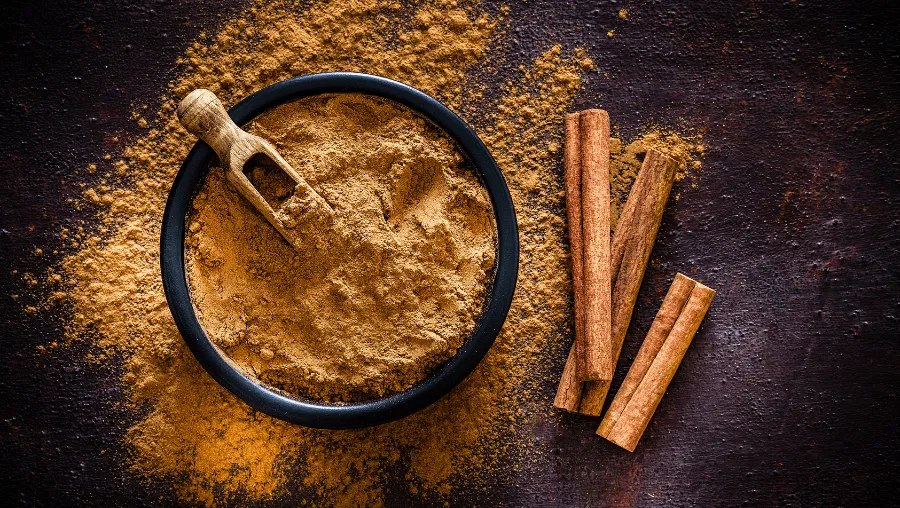
As this inner bark dries, it naturally begins to curl inward and form rolls. Smaller pieces of inner bark can then be placed inside the larger rolls before they are air-dried. Once fully dried, they become the cinnamon sticks commonly used for cooking and flavoring.
That familiar rolled shape is therefore not simply created for appearance—it comes naturally from the way the bark changes as it dries.
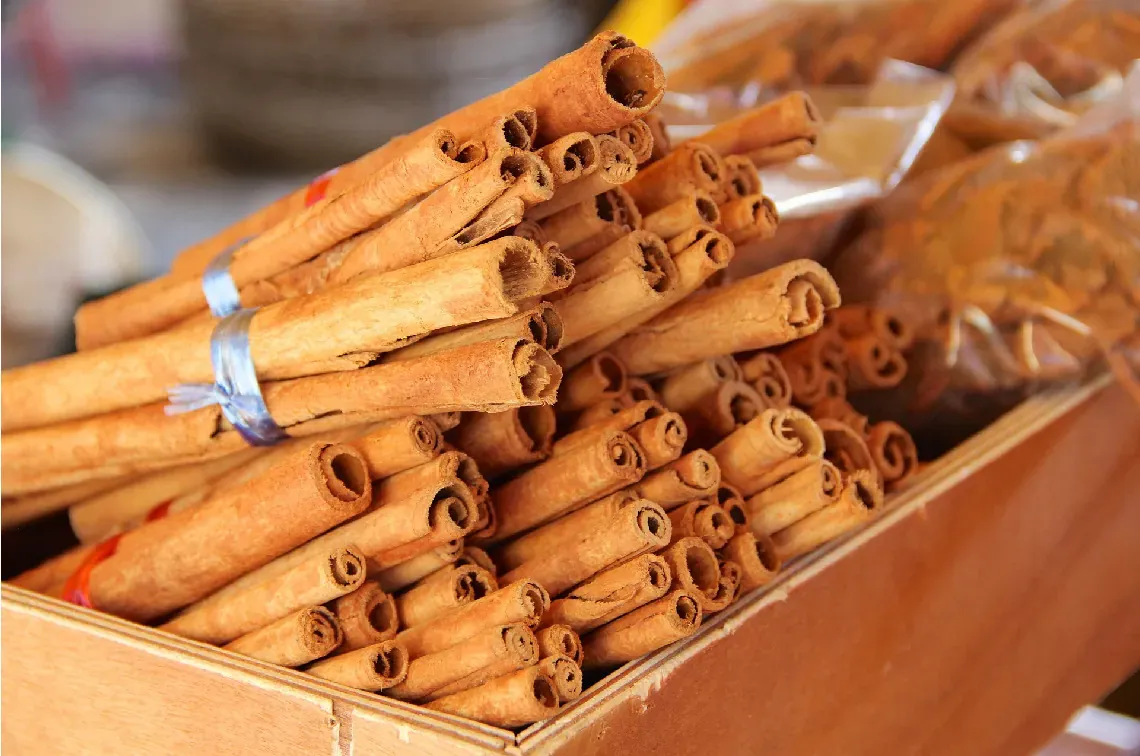
Cinnamon is available in several forms, but cinnamon sticks and ground cinnamon powder are the two most commonly used in cooking and baking.
The main difference is how they are processed and how quickly their aroma is released.
Cinnamon sticks provide a gentler fragrance that can last for a longer period. This makes them suitable for soups, stews, drinks, and other recipes that require longer cooking or simmering.
Ground cinnamon powder, on the other hand, releases its aroma much more quickly and strongly. However, that fragrance can also fade faster.
For this reason, cinnamon powder works well when added near the end of cooking or when used directly in desserts, baked goods, and beverages.
Choosing between the two depends on the result you want: a slow and lasting aroma from cinnamon sticks, or a stronger and faster release of flavor from cinnamon powder.
From a Tree to Your Kitchen
Cinnamon has a distinctive aroma that people tend to either love or avoid. For cinnamon lovers, however, its warm fragrance is difficult to replace.
What makes this everyday spice even more interesting is its origin.
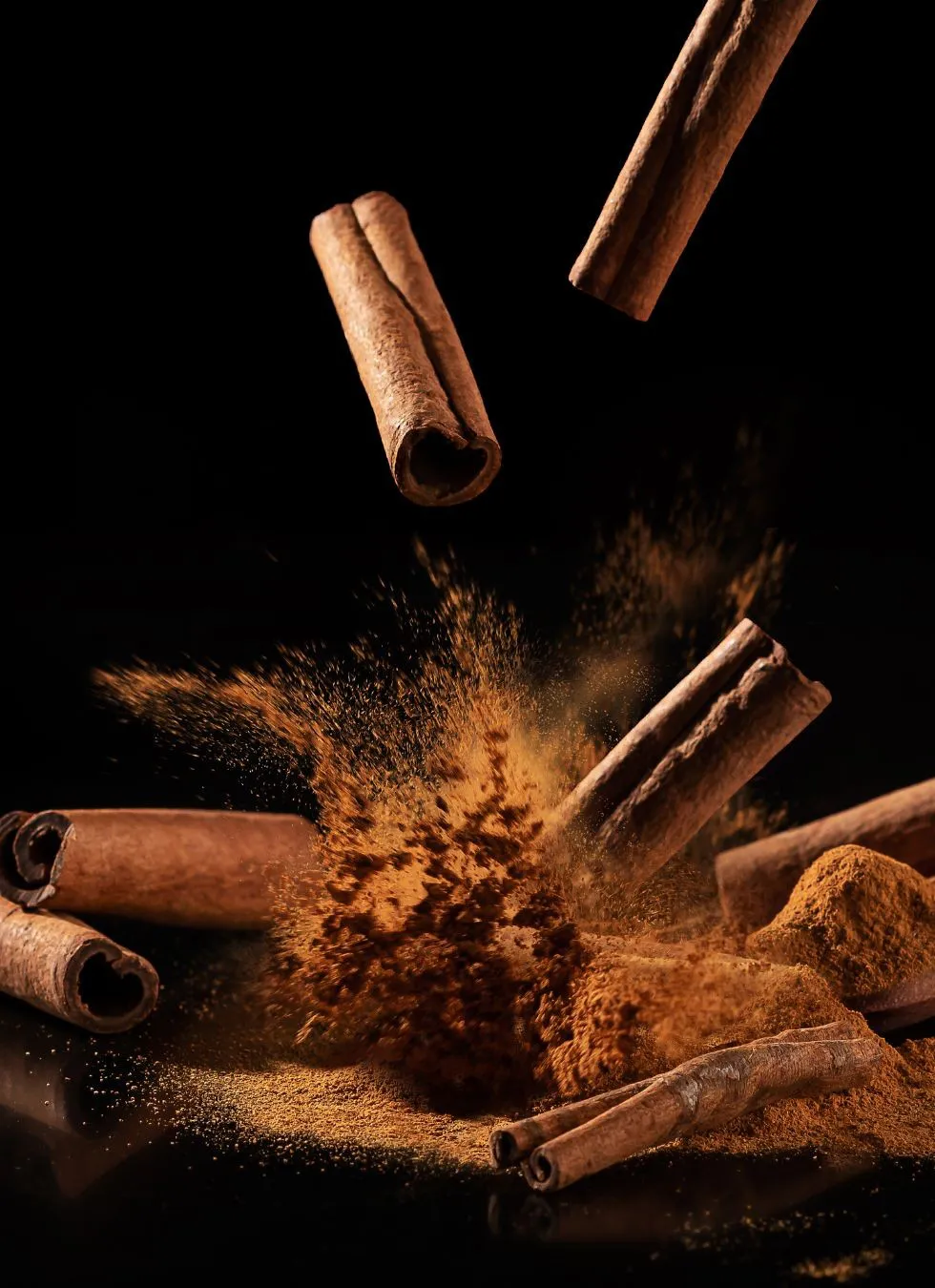
Behind every cinnamon stick is a tree, and behind its familiar rolled shape is the natural behavior of bark as it dries. It is another reminder that trees provide much more than timber—they also give us materials and ingredients that have become part of everyday life.
Now that you know cinnamon is actually made from tree bark, will your next cinnamon roll taste a little different?
Follow TFSI for more stories and practical knowledge about trees, timber, and the many ways forest resources are connected to our daily lives.
Read More
Related Product

Reference :
https://www.mdlbaking.com/pages/cinnamon?srsltid=AfmBOooV2rLMx6x_2onzSOkMmSROSeZAyI1OdsGYsC8WT18syQ1Cm0Mp
https://tw.news.yahoo.com/%E8%82%89%E6%A1%82%E6%8D%B2%E7%9A%84%E7%BE%8E%E5%91%B3%E9%97%9C%E9%8D%B5-%E8%82%89%E6%A1%82-%E4%BE%86%E8%87%AA%E4%B9%BE%E7%87%A5%E6%A8%B9%E7%9A%AE-072926262.html
https://gcm.org.tw/blog/b-4ejo-c04wj3b-4ejo-k27t8-u16/