


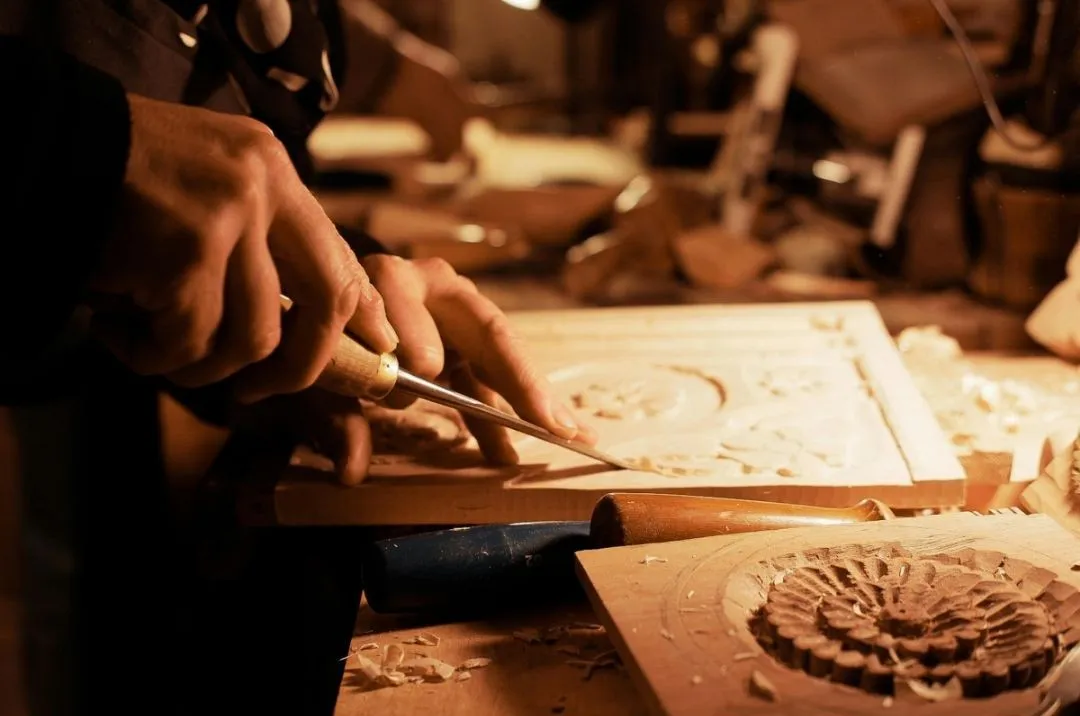
Every woodcarving begins with two important elements: the skill of the craftsman and the character of the wood. When the right blade meets the right timber, a natural material can become a work of art that lasts for generations.
Contents :
1. An Art Shaped Through Centuries
2. Great Carving Begins with the Right Wood
3. Choosing the right timber is just as important.
4. Timber Must Be Ready Before Carving Begins
5. Three Ways to Shape Wood into Art
6. Preserving Craftsmanship Also Means Preserving Forests
7. From Timber Selection to the Finished Artwork
8. TFSI | Your Professional Timber Solutions Partner
An Art Shaped Through Centuries
Wood has long been more than a construction material. In the hands of an artist, its grain, color, and natural form can become part of the creative expression.
The history of Chinese woodcarving reaches back to ancient times and continued to develop through the Warring States period and the Han, Tang, Song, Ming, and Qing dynasties.
Over the centuries, carving techniques became increasingly refined. Detailed woodcarvings appeared on temple columns, architectural decorations, Buddhist statues, furniture, and artworks.
Many historic palaces and temples in China still preserve these detailed carvings today. They reflect not only religious beliefs and cultural traditions, but also the lasting relationship between skilled craftsmanship and carefully selected timber.
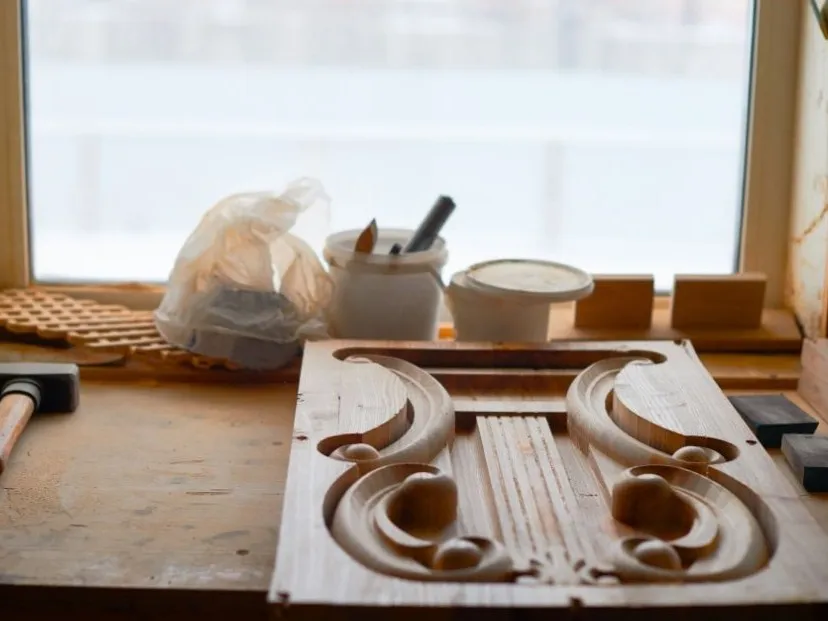
Great Carving Begins with the Right Wood
A skilled woodcarver understands how to use the blade, control proportions, and develop a balanced composition. But technique alone does not create a lasting masterpiece.
Choosing the right timber is just as important.
Different wood species behave differently during carving. Their hardness, grain, density, color, and stability can all influence the final appearance and performance of the work.
A beautiful carving made from unsuitable or unstable timber may crack or deform over time. This is why experienced craftsmen consider material selection part of the creative process itself.
The principle is simple: choose the right wood for the right work.

Timber Must Be Ready Before Carving Begins
Freshly cut timber cannot simply be turned into a detailed carving immediately.
Before carving, wood needs to be properly dried so that its moisture content becomes more stable. Traditionally, some timber may be seasoned for years before being used for important carving projects.
If the wood still contains too much moisture, it can shrink, warp, or crack as it continues to dry. These changes may damage the shape and details of the finished work.
Whether timber is naturally air-dried or professionally kiln-dried, proper moisture control is therefore an important part of preparing wood for carving.
The species also makes a difference.
Some woods are relatively soft and easy to shape, making them suitable for learning and general carving. Others have fine, dense grain or attractive natural patterns that can add greater visual detail to the finished piece.
Rare or highly valued species may be selected for collectible works, while woods containing natural oils and offering insect resistance have traditionally been used for religious carvings and other important artworks.
For a woodcarver, the timber is not simply the material beneath the blade—it becomes part of the finished expression.
Three Ways to Shape Wood into Art
Woodcarving can generally be divided into three major forms: sculpture in the round, relief carving, and root carving.
Sculpture in the round creates a complete three-dimensional object that can be viewed from different directions. Human figures, animals, and religious statues are common examples.
Relief carving creates images on a flat wood surface by carving at different depths. The result combines some of the visual qualities of both sculpture and painting, while the original wood surface remains part of the composition.
Root carving takes a different approach. Instead of completely reshaping the material, the artist works with the original curves, branches, textures, and irregular forms of tree roots.
This style is often described by the idea of “30% craftsmanship and 70% nature.” Rather than controlling every detail, the artist allows the natural form of the wood to guide the final design.
Preserving Craftsmanship Also Means Preserving Forests
Passing woodcarving traditions to the next generation requires more than teaching carving techniques. The availability of suitable timber is equally important.
As carbon reduction and responsible sourcing become increasingly important, more craftsmen and studios are paying attention to where their timber comes from.
One approach is the use of FSC-certified timber, which supports responsible forest management and provides greater transparency in timber sourcing.
For woodcarving, responsible sourcing has a direct connection to the future of the craft. Without healthy and responsibly managed forests, future craftsmen may have fewer suitable materials available for their work.
Preserving the art of woodcarving therefore involves two forms of continuity: passing down the craftsmanship and maintaining responsible timber resources.
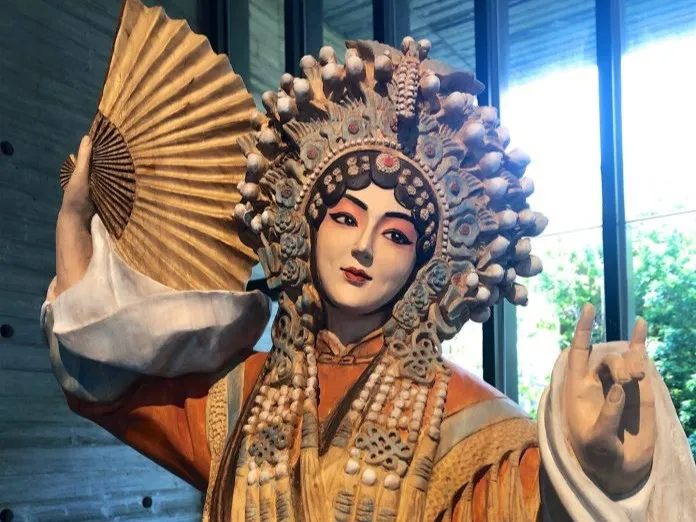
From Timber Selection to the Finished Artwork
Every part of a woodcarving tells a story.
The movement of the blade determines its form. The skill of the craftsman creates its details. The natural grain gives every piece its own character. And the quality of the timber helps determine how well the work can endure over time.
This is why material selection remains an essential part of woodcarving.
As the timber industry moves toward more responsible sourcing, choosing certified wood can also connect traditional craftsmanship with modern sustainability goals.
TFSI understands that different wood applications require different material characteristics. We provide FSC-certified timber, professional material recommendations, strict quality control, diverse species options, and customized processing solutions for different project needs.
For craftsmen, manufacturers, and businesses that value material quality, selecting the right wood is the first step toward creating lasting work.
Read More
Related Product

Reference :
https://sogoart.com.tw/article/E9AE73BACC6D6E3C3E26
http://miaolitravel.net/Article.aspx?sNo=04007426
https://digitalarchive.npm.gov.tw/Integrate/IIIFViewer?id=62471&dep=U&imageName=335235^^^84611603723
https://www.instagram.com/p/CsdZtT5y5XQ/?img_index=1
https://www.instagram.com/p/C_7dDFDMRbP/?img_index=1
https://mypaper.pchome.com.tw/deanchen/post/1320658515
https://greenmedia.today/article_detail.php?cid=8&mid=1209
https://reurl.cc/Mz2414