


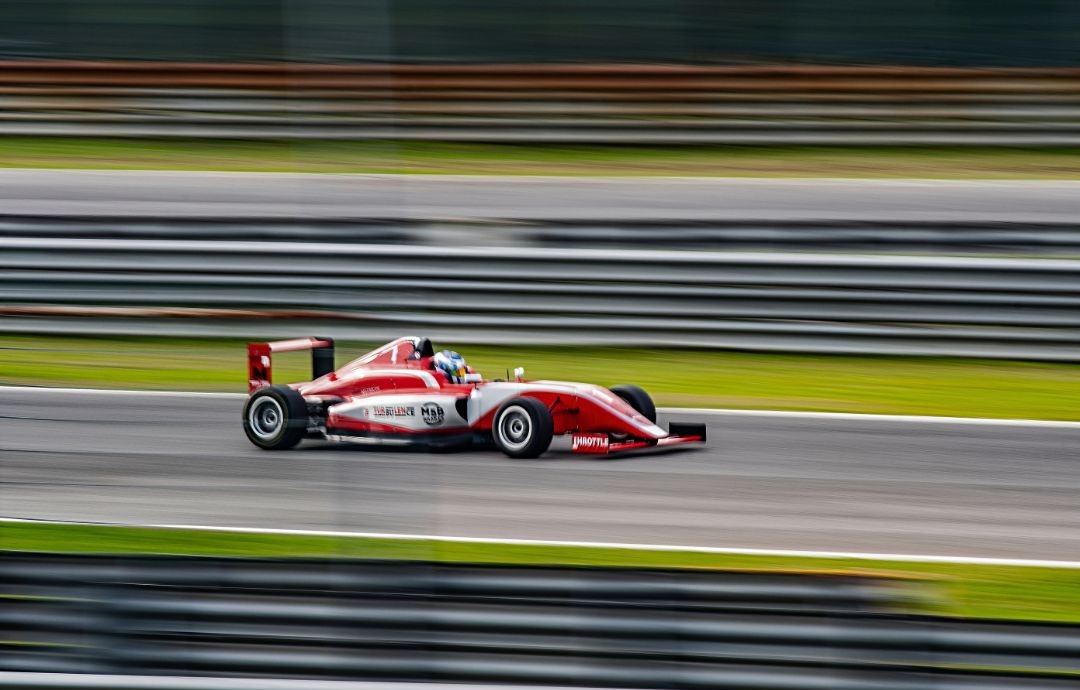
Those bright sparks under an F1 car are more than a dramatic sight. Behind them is a component called the Plank—and its history has a surprising connection to wood.
Contents :
1. What Creates the Sparks Under an F1 Car?
2. Why Did F1 Introduce the Plank?
3. When Wood Became Part of F1 Engineering
4. A Few Millimeters Can Change the Result
5. Wood Changed, but Its Legacy Remained
6. TFSI | Your Professional Timber Solutions Partner
What Creates the Sparks Under an F1 Car?
One of the most impressive sights in Formula 1 is a car racing through a corner with sparks flying from underneath.
The effect is even more noticeable during night races.
When an F1 car travels over bumps or is pushed close to the track at high speed, parts underneath the car can make contact with the road surface.
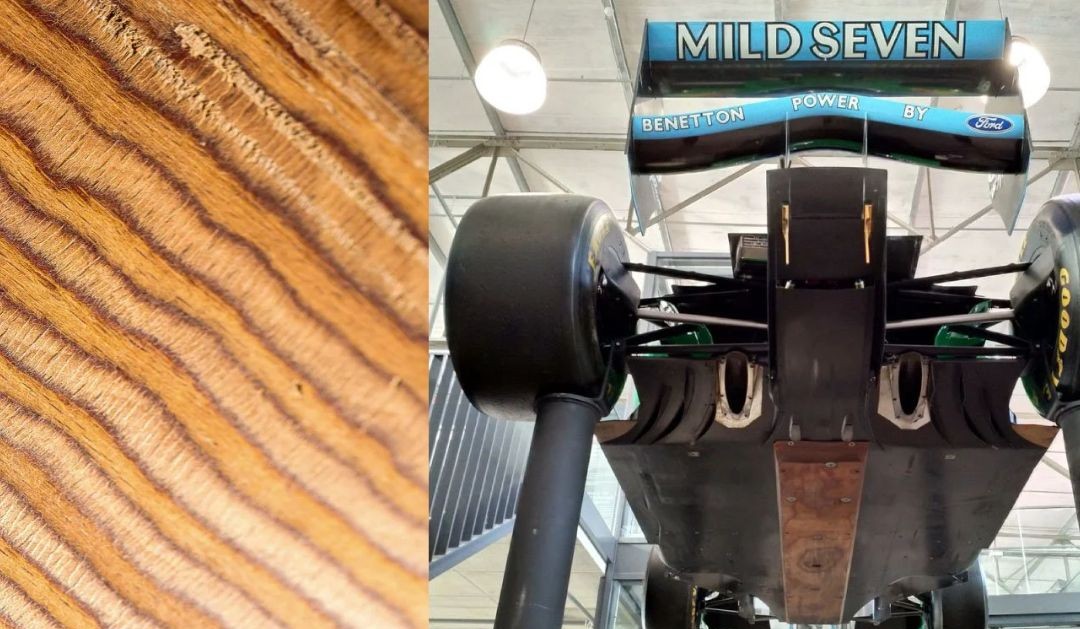
Along the center of the floor is a component known as the Plank. Metal skid blocks are fitted around this area, and when these metal parts scrape against the track, friction creates the bright sparks seen behind the car.
But there is something unexpected behind the name.
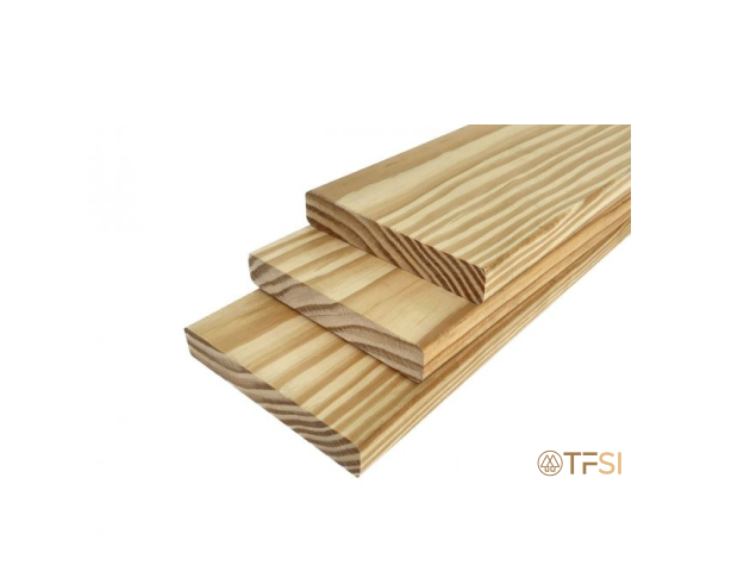
A plank normally means a long, flat piece of wood—and when this component was first introduced to Formula 1, it was made from a high-density wood-based material.
Why Did F1 Introduce the Plank?
The story of the Plank is closely connected to one of the most tragic periods in Formula 1 history.
After flat-bottom rules were introduced, teams looked for ways to improve aerodynamic performance and grip. One approach was to run the cars as close to the track as possible.
But an extremely low ride height also increased the chance of the underside touching the track, which could affect the stability of the car.
At the 1994 San Marino Grand Prix, two fatal accidents changed the direction of F1 safety.
During qualifying, Roland Ratzenberger suffered a front-wing failure before crashing into a concrete wall.
The following day, three-time World Champion Ayrton Senna lost control of his car during the race and also suffered a fatal crash.
Following the tragic weekend, the FIA introduced a series of safety changes.
From July 1994, Formula 1 cars were required to carry a 10 mm-thick Plank underneath the floor. By checking how much the Plank wore during a race, officials gained a way to control how close cars could run to the track.
When Wood Became Part of F1 Engineering
The early F1 Plank was not simply an ordinary wooden board.
It was made from a high-density wood composite produced by combining thin layers of beech with resin.
These layers were stacked and pressed together under high temperature and pressure, creating a dense, strong, and wear-resistant material.
The resulting composite offered an unusual balance of properties. Its strength was approximately half that of steel, while its weight was only around 20% of steel. For Formula 1, this provided a material that could withstand demanding conditions while still allowing wear to be measured accurately.
The Plank therefore had a very specific job: it was not there simply to protect the floor. Its wear provided a physical record of how low the car had been running.
A Few Millimeters Can Change the Result
Because the Plank sits beneath the center of the car, it can gradually wear whenever the underside makes contact with the track.
After a race, officials can measure its remaining thickness at specified points. If too much material has worn away, the car does not meet the technical regulations—even if it has already crossed the finish line.
The 2025 Las Vegas Grand Prix provided a clear example.
McLaren's Lando Norris originally finished second, while teammate Oscar Piastri finished fourth. Both drivers were later disqualified after post-race inspections found excessive Plank wear.
Norris's Plank measured as little as 8.88 mm, while Piastri's reached 8.74 mm at its thinnest point.
Those measurements show how precisely the rule is enforced. In Formula 1, fractions of a millimeter can separate a legal car from a disqualification.
Wood Changed, but Its Legacy Remained
Modern Formula 1 cars no longer use the same wood-based Plank material introduced in the 1990s.
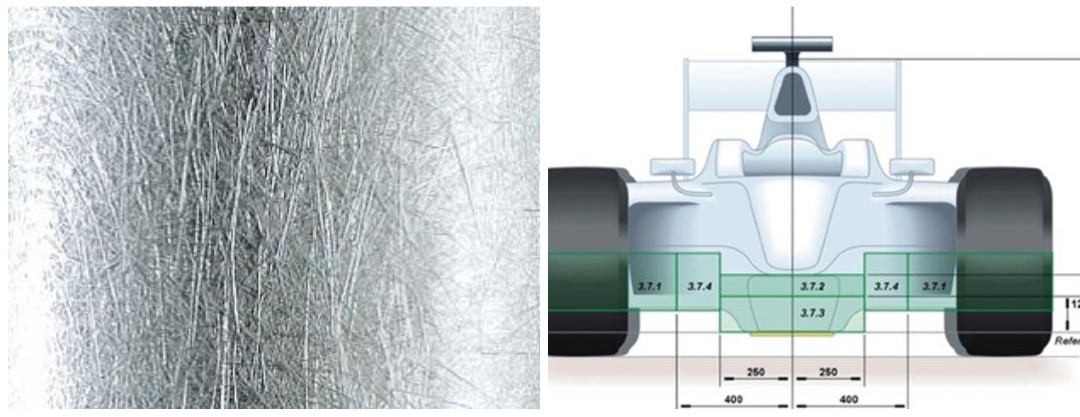
As material technology developed, F1 adopted composite materials made with glass fiber and resin, providing more consistent wear characteristics under the high-speed friction experienced beneath the car.
Yet the name “Plank” remains.
More importantly, there is still an interesting connection between today's regulations and the material used in the past.
Under the 2026 FIA Technical Regulations, the Plank material must have a specific gravity between 1.3 and 1.45. This range is closely connected to the density characteristics of the earlier wood-based material.
The material itself has evolved, but the original Plank still leaves its mark on how the component is defined.
It is an unusual example of how a wood-based material once became part of Formula 1 engineering—and how its performance helped establish a measurable technical standard.
The same principle applies far beyond motorsport: material performance depends not only on what the material is, but also on how it is selected, processed, and used.
TFSI provides professional timber solutions for different applications, from specialty wood products and structural timber to customized dimensions and processing. We help customers turn material requirements into practical solutions.
Read More
Related Product

Reference :
1994 年伊莫拉事故後的安全改革、德國站起安裝 Plank:https://www.formula1.com/en/latest/article/imola-94-and-the-legacy-of-improved-safety.5P8zqEzNjKzYw8qdckoYFF
1994 年 7 月德國站起強制安裝 Plank:https://www.motorsport.com/f1/news/senna-imola-1994-f1-safety/4787047/
Ratzenberger 排位賽事故(前翼斷裂):https://en.wikipedia.org/wiki/Roland_Ratzenberger Senna
正賽事故:https://en.wikipedia.org/wiki/Death_of_Ayrton_Senna
平底盤規則與 Plank 的由來:https://www.bilibili.com/opus/549756840392261433 Plank
位置、尺寸與金屬滑塊:https://f1mix.com/why-do-f1-cars-have-a-wooden-plank
Plank 位置、10mm 厚度、改用玻璃纖維材料:https://en.wikipedia.org/wiki/Skid_block
壓縮山毛櫸製法、強度為鋼的一半、重量為鋼的五分之一:https://permalideho.co.uk/products/
壓縮山毛櫸技術規格:https://www.askmotorsport.fr/pdf/jabroc.pdf
早期木質 Plank 比重 1.3–1.45:https://www.pegasusautoracing.com/productselection.asp?Product=6180
山毛櫸原料、改用玻璃纖維複合材料的原因:https://www.autosport.com/f1/news/the-simple-f1-plank-rule-that-is-more-complicated-under-the-surface/10787127/
2025 拉斯維加斯站 Norris、Piastri 取消成績:https://www.formula1.com/en/latest/article/norris-and-piastri-disqualified-from-las-vegas-gp-as-mclarens-fail-post-race.10uHwsN6mLfCNoZ6nKQvPy
2025 拉斯維加斯站名次與取消成績:https://ca.sports.yahoo.com/news/lando-norris-oscar-piastri-disqualified-134815916.html
2025 拉斯維加斯站 Plank 量測數值:https://www.espn.com/f1/story/_/id/47069893/las-vegas-gp-mclaren-lando-norris-oscar-piastri-risk-disqualification
2026 FIA 技術規則 Plank 比重規定:https://www.fia.com/sites/default/files/fia_2026_formula_1_technical_regulations_issue_8_-_2024-06-24.pdf