


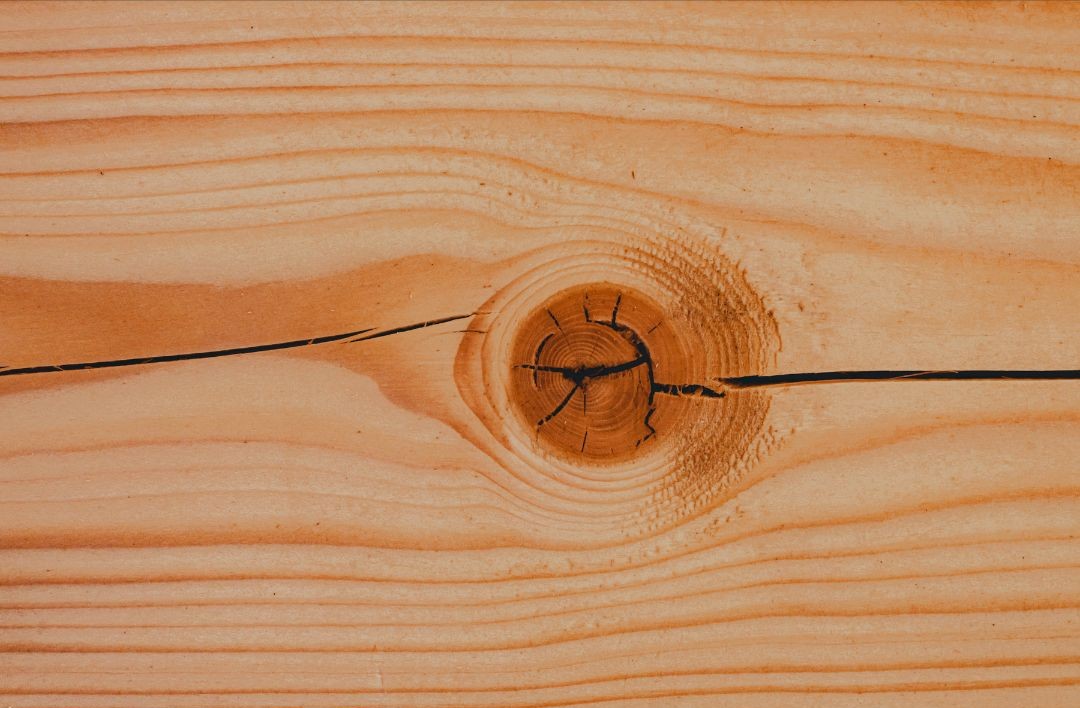
Every knot tells part of a tree's growth story. What looks like an imperfection can also be a natural design feature.
Contents :
1. Why Do Some People Prefer Wood Without Knots?
2. Where Do Wood Knots Come From?
3. How European Interiors Make Use of Natural Knots
4. Can Knots Reduce Timber Strength?
5. Why Knot Location Matters
6. Choosing Between Clear and Knotted Timber
7. The Right Timber Starts with the Right Application
8. TFSI | Your Global Timber Solutions Partner
Why Do Some People Prefer Wood Without Knots?
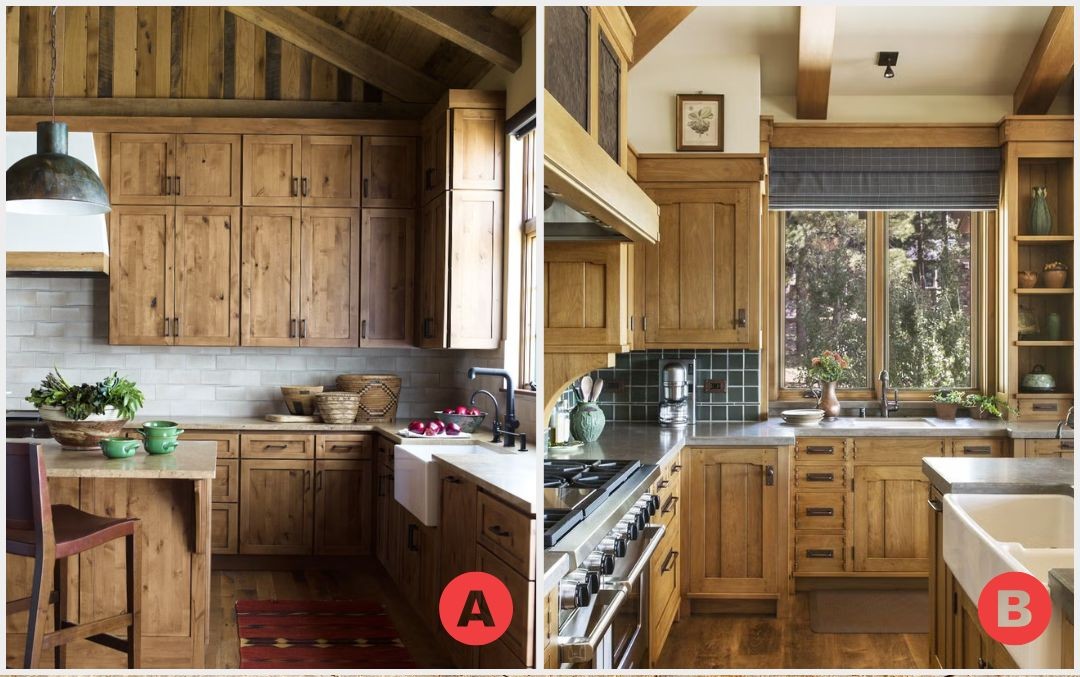
Imagine two rooms finished with natural solid wood.
Both use the same type of material, but one features wood with visible knots, while the other has a smooth, nearly knot-free surface.
Which would you choose?
ImageA:InteriorwithVisibleWoodKnots Image A: Interior with Visible Wood Knots
ImageB:InteriorwithClearWood Image B: Interior with Clear Wood
For many years, clear timber has been a popular choice in Asian interior design. Its uniform grain and clean appearance are often associated with higher-grade materials.
As a result, the dark circular patterns found in natural wood are sometimes viewed as defects.
However, knots are a normal part of how trees grow.
Their presence does not automatically mean that a piece of timber is unsuitable or poor in quality. What matters is the type, size, and position of the knots, as well as how the wood will be used.
To understand wood knots, we first need to look at how a tree develops.
A tree grows outward from its central pith, adding new layers of wood around the trunk each year.
During its early growth, branches extend from different parts of the trunk. As the tree becomes taller and its upper canopy grows thicker, lower branches may receive less sunlight.
Over time, some of these branches die and fall away.
Although the branches disappear, their bases remain inside the trunk. As new growth rings form, they gradually surround these remaining sections.
When the tree is later cut into boards, the enclosed branch bases appear as wood knots.
This also explains why knots are often found closer to the center of a tree.
After the lower branches have disappeared, the outer sections of the trunk can continue growing without enclosing new branches. These outer layers are more likely to produce timber with a clear and even grain.
To obtain knot-free boards, manufacturers generally need to select suitable outer sections or cut away areas containing knots.
Because less of the log can be used for clear grades, knot-free timber often has a lower recovery rate.
Knotted timber, by comparison, retains more of the natural features formed during tree growth.
How European Interiors Make Use of Natural Knots
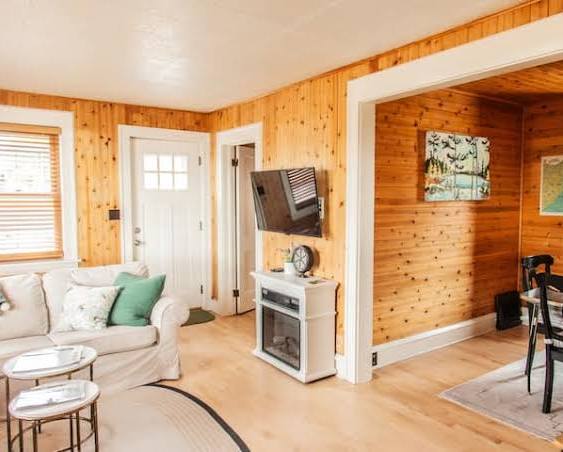
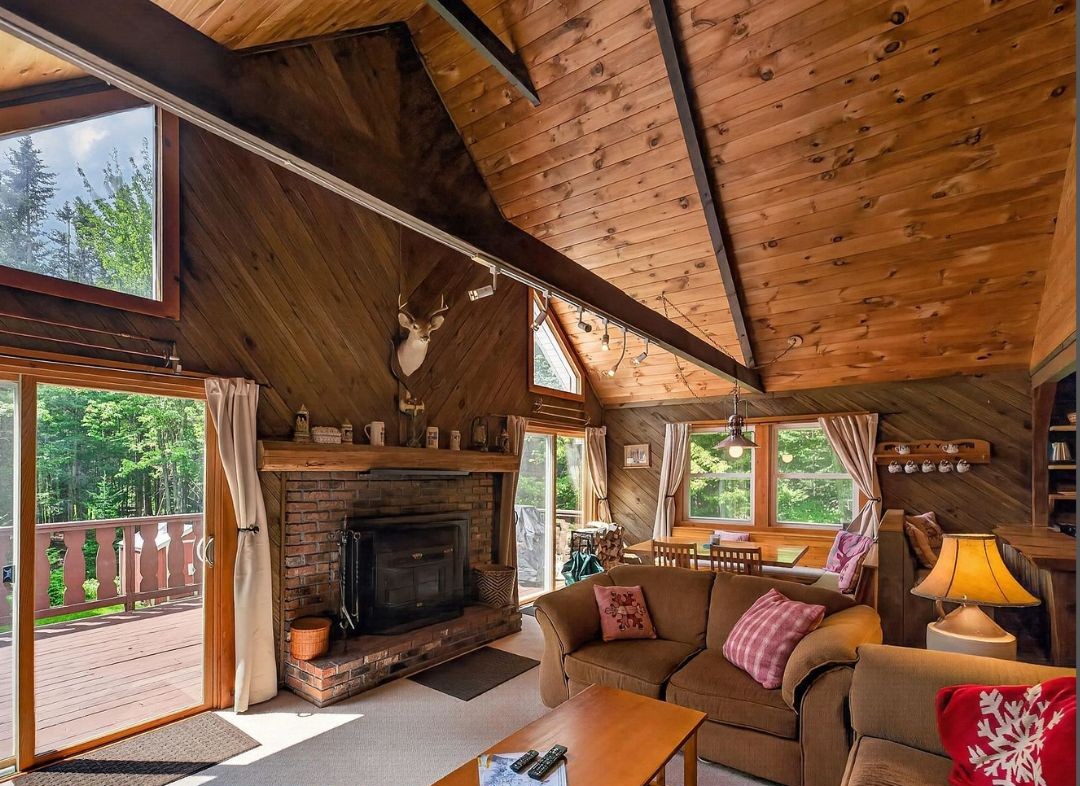
While clear wood remains popular in many Asian markets, visible knots are widely accepted in European interior design.
Oak flooring is a good example.
European flooring suppliers commonly offer different appearance grades based on the number, size, and visibility of knots.
Some grades feature a clean surface with very few knots. Others allow larger and more frequent knots, creating a natural or rustic appearance.
In the UK, oak flooring with visible knots is often a popular choice among homeowners and designers.
There are practical reasons for this preference.
Knotted grades are generally more affordable than clear grades.
Allowing more natural features also increases the amount of usable timber from each log, helping reduce unnecessary material waste.
From a design perspective, knots and natural color differences create visual variety.
Each floorboard has its own grain pattern, making the finished surface feel less uniform and more connected to the original tree.
For many designers, these differences are not flaws to hide but characteristics worth keeping.
Can Knots Reduce Timber Strength?
Appearance is only one part of timber selection.
When wood is used for furniture, flooring, or structural applications, its strength and stability also matter.
So, does a knot make wood weaker?
The answer depends on the characteristics and location of the knot.
Sound Knots and Dead Knots
Sound Knots (Live Knots) form when a living branch becomes surrounded by new wood. The branch remains firmly connected to the surrounding fibers, making the knot generally more stable.
Dead Knots develop when a branch dies before new wood grows around it. Because the connection is weaker, these knots may become loose or fall out over time.
Why Knot Location Matters
Two knots of similar size may have different effects on timber performance.
For example, a knot near the center of a board or close to the neutral axis of a beam may have a smaller effect under certain loading conditions.
A knot near the edge of a board or on the tension side of a beam can have a greater impact on strength.
Knots can also interrupt the direction of wood fibers, which is especially important when timber must carry structural loads.
For this reason, knotted wood should be evaluated according to its intended application rather than judged by appearance alone.
Decorative panels and load-bearing timber have different performance requirements. Structural applications require appropriate grading and professional assessment.
Choosing Between Clear and Knotted Timber
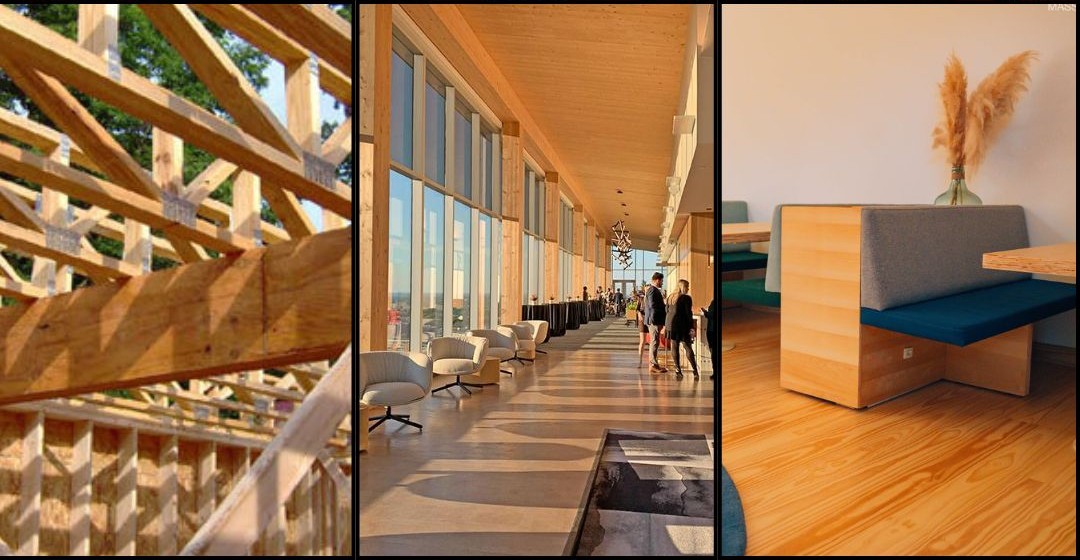
Clear wood and knotted wood offer different visual results, but neither is automatically the better material.
Clear or Low-Knot Timber
A smooth surface with minimal knots creates a clean and consistent appearance. This makes it suitable for modern, minimalist, and refined interior designs.
Natural Knotted Timber
Visible knots highlight the original growth patterns of the tree. Their natural variation works particularly well with Scandinavian, rustic, and industrial design styles.
The choice should depend on the project rather than a simple preference for higher or lower appearance grades.
For example, a designer creating a minimalist interior may prefer a uniform wood surface, while a project aiming for a warm and natural atmosphere may benefit from visible knots.
Budget and material efficiency are also important considerations.
Using knotted grades where appropriate can provide more design flexibility while making better use of available timber resources.
The Right Timber Starts with the Right Application
Wood grading helps buyers understand differences in appearance, but appearance alone does not determine whether timber is suitable for a specific purpose.
A board with visible knots may be an excellent choice for decorative applications, while structural uses require closer attention to knot characteristics, strength, and grading requirements.
Understanding these differences allows buyers and designers to make more informed material decisions.
At TFSI, we provide professional timber solutions based on each customer's application and specifications. From material selection and timber grading to customized dimensions and processing, we help customers identify suitable products for their projects.
Whether you prefer a clean, uniform appearance or the natural character of knotted timber, choosing the right material begins with understanding its properties.
Read More
Related Product

References:
木節集中於樹幹中心、外層形成無節材:https://www.lowimpact.org/posts/knotty-problem-prune-trees-produce-quality-timber/
英國橡木地板 Rustic 等級最受歡迎:https://www.factory-direct-flooring.co.uk/advice-centre/a-guide-to-different-flooring-grades Rustic
等級更永續、減少浪費:https://commercial.akirby.co.uk/shop/solid-hardwood-flooring/rustic-grade
橡木地板等級與木節大小:https://havwoods.com/ie/timber-flooring-grades
木節位置、大小對強度的影響:https://www.jlconline.com/how-to/the-strength-of-wood_o/
木節與木材抗拉強度研究:https://arxiv.org/abs/2201.03464v1