


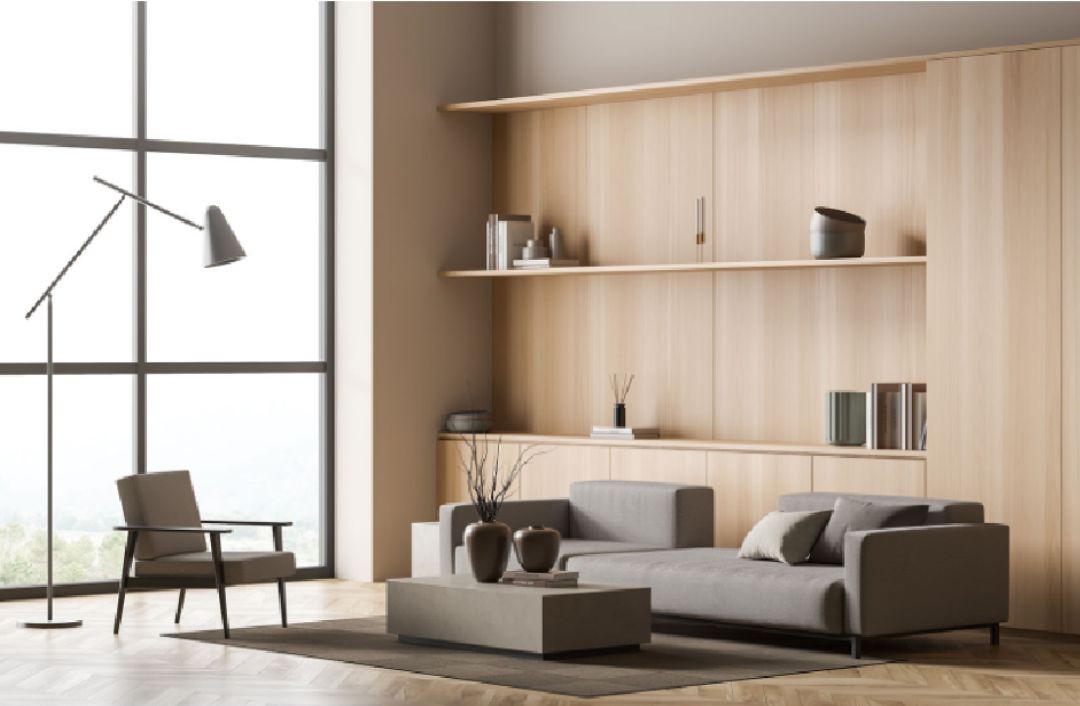
How Light-Colored Wood Shapes Nordic Interiors
Scandinavian interiors are known for their natural light, simple furniture, and warm wooden surfaces. Among the many wood species used in Nordic design, birch stands out for its fine grain, light color, and versatility.
Contents :
1. How Does Wood Shape Scandinavian Interior Design?
2. Why Are Light Woods Common in Nordic Interiors?
3. Natural Wood: Understanding Knots and Color Variation
4. Birch: A Classic Material in Scandinavian Design
5. Full Birch Plywood: Extending Natural Wood into Larger Panels
6. FAQ: Does Scandinavian Design Require Light-Colored Wood?
7. TFSI | Your Professional Timber Solutions Partner
How Does Wood Shape Scandinavian Interior Design?
What makes Scandinavian interiors feel so bright, natural, and comfortable?
The answer is not only about furniture shapes or room layouts. Material selection also plays an important role.
Wooden floors, cabinets, wall panels, and furniture all influence the atmosphere of a space through their natural colors and grain patterns.
Light-colored wood helps create a clean and open appearance, while its natural texture adds warmth without making the design feel complicated.
However, not every light-colored wood produces the same result.
Pine, spruce, maple, and birch each have different grain patterns, colors, and natural characteristics.
Among these materials, birch has become closely connected with Scandinavian furniture and interior design.
Its fine texture, relatively even color, and subtle grain make it a practical option for projects that require a simple and balanced appearance.
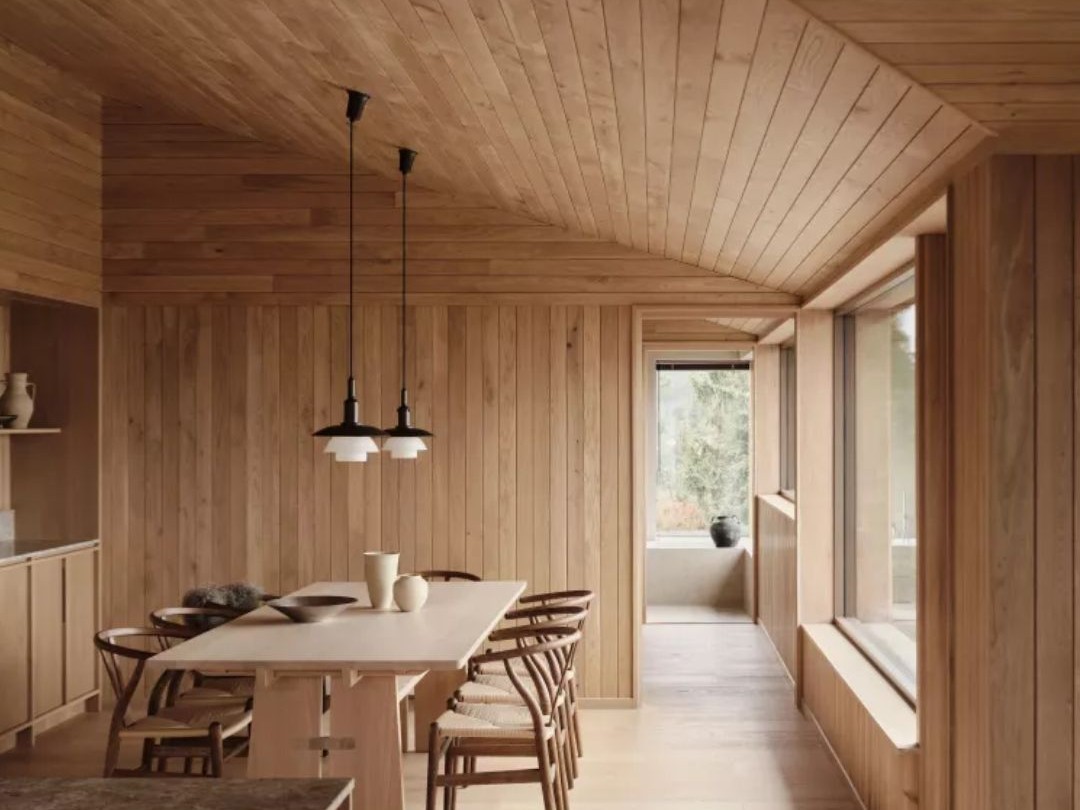
Why Are Light Woods Common in Nordic Interiors?
The popularity of wood in Scandinavian design is closely related to the natural environment of Northern Europe.
Countries such as Finland and Sweden have extensive forests where pine, spruce, and birch are commonly found.
For generations, these locally available materials have been used in buildings, furniture, and everyday products.
Over time, their natural appearance became an important part of the region's design identity.
Climate also influences how Scandinavian spaces are designed.
During winter, daylight hours are very limited. In Helsinki, Finland, for example, there are fewer than six hours of daylight around the winter solstice.
This makes natural lighting an important consideration in interior design.
By combining light-colored walls with pale wooden surfaces, designers can help reflect available daylight and create a brighter indoor environment.
The result is a style that brings together natural materials, practical design, and a warm living atmosphere.
Natural Wood: Understanding Knots and Color Variation
Wood is a natural material, and its appearance reflects how a tree grows.
Knots develop where branches become part of the growing trunk. Color differences can result from environmental conditions, different sections of the tree, and variations between heartwood and sapwood.
Even boards from the same species may have different grain patterns and shades.
Scandinavian design does not require every wooden surface to look completely identical.
Instead, designers often use natural variations to create a balanced and comfortable appearance.
For projects that require a cleaner and more consistent look, careful wood selection becomes especially important.
Birch is often preferred because its light color and fine grain can create a relatively uniform surface without losing the natural character of wood.
Birch: A Classic Material in Scandinavian Design
A Soft Color and Fine Texture
Birch is known for its pale appearance and smooth grain.
Its sapwood generally ranges from creamy white to light yellow, while the contrast between growth rings is usually less noticeable than in many other wood species.
This gives birch a soft and understated appearance.
With appropriate grading and selection, birch panels can also have fewer visible knots, making them suitable for interiors that emphasize simple lines and clean surfaces.
These characteristics allow birch to work well in cabinetry, furniture, wall panels, and other decorative applications.
Although natural knots and color variations may still appear, birch offers a balanced combination of natural texture and visual consistency.
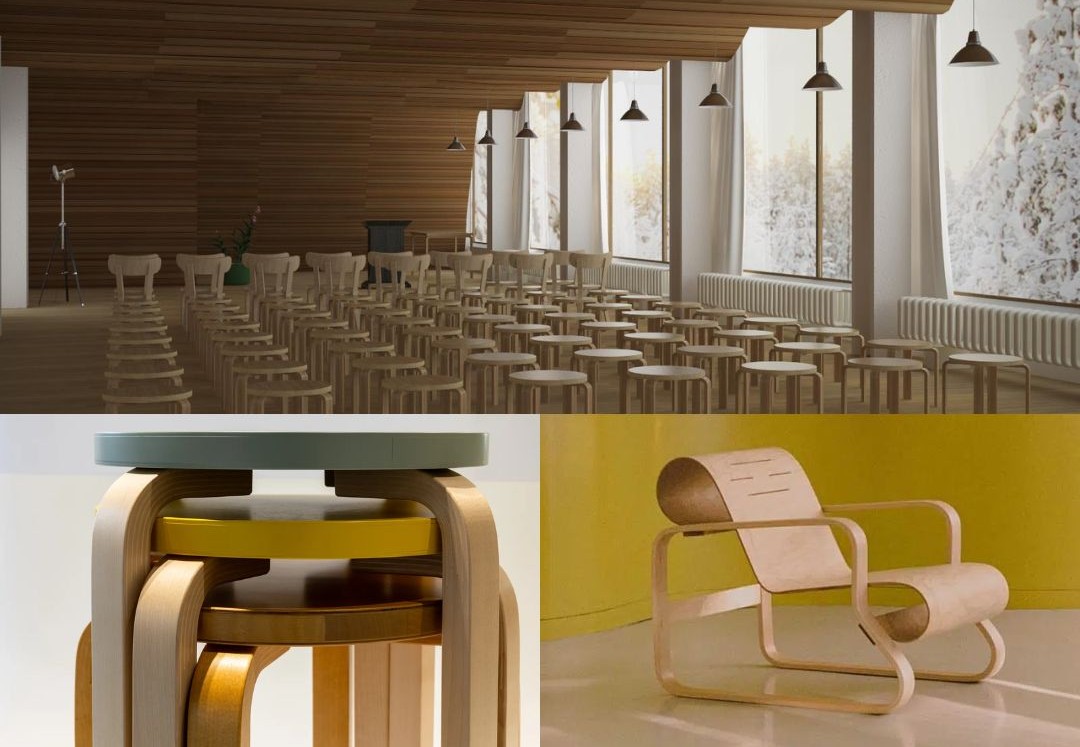
Alvar Aalto: Bringing Birch into Modern Furniture
The relationship between birch and Scandinavian design can be seen in the work of Finnish architect and designer Alvar Aalto.
In the early 1930s, Aalto designed furniture for the Paimio Sanatorium in Finland.
While tubular steel was widely used in modern furniture at the time, Aalto chose Finnish birch for his famous Paimio Chair.
Wood offered a warmer touch than metal while supporting the simple, functional design he wanted to achieve.
In 1933, Aalto introduced another famous piece: Stool 60.
Made from birch, this three-legged round stool featured a simple structure that combined practicality with modern design.
Its timeless appearance has allowed it to remain in production for decades.
In 1935, Aalto, his wife, and their partners established Artek, helping bring modern furniture made with natural materials into homes and public spaces.
These designs helped establish birch as one of the recognizable materials associated with Scandinavian furniture.
Full Birch Plywood: Extending Natural Wood into Larger Panels
Solid birch offers attractive color and grain, but some furniture and interior applications require larger and more stable panels.
This is where birch plywood provides an advantage.
Birch plywood is manufactured by bonding thin wood veneers together, with the grain direction of adjacent layers arranged crosswise.
This layered construction improves dimensional stability and helps reduce movement caused by changes in humidity.
It also allows the light color and fine grain of birch to be used across larger surfaces.
Another distinctive feature is the visible layered structure along the edges.
Instead of hiding these layers, designers can leave the edges exposed as part of the finished appearance.
Full Birch Plywood uses birch veneers throughout the panel, including both the face veneers and the inner core.
This makes it especially suitable for projects where the surface, edges, and material structure are all important to the final design.
Birch Plywood Applications in Furniture and Interiors
The combination of natural appearance, dimensional stability, and workability makes birch plywood useful across many applications.
Cabinets and Storage Systems
Birch plywood can be used for bookshelves, storage cabinets, and open shelving.
Its light color allows large cabinet surfaces to blend naturally into Scandinavian-inspired interiors without making the space feel heavy.
Interior Wall Panels
For wall applications, large birch plywood panels can create a continuous wooden surface.
The fine grain and pale tones help maintain a soft, natural appearance while adding texture to the room.
Furniture Manufacturing
Birch plywood can also be cut and processed into tabletops, stools, chairs, and storage furniture.
Its layered edges provide an additional design feature, especially in furniture that highlights simple construction and natural materials.
For furniture manufacturers and interior material suppliers, birch plywood offers flexibility in both product design and production.
FAQ: Does Scandinavian Design Require Light-Colored Wood?
Not necessarily.
Scandinavian design is defined by more than wood color. Natural materials, simple forms, and effective use of light are also important elements.
Dark-colored timber can create a Scandinavian-inspired interior when combined with light walls, suitable lighting, and balanced furniture design.
However, light-colored wood is often easier to use when the goal is a bright and open appearance.
For this reason, birch remains a popular option for designers who want a clean surface, subtle grain, and natural warmth.
Choosing the Right Birch Plywood for Your Project
From classic Scandinavian furniture to modern cabinetry and interior panels, birch continues to offer a useful combination of appearance and performance.
Selecting the right plywood involves more than choosing a wood species.
Panel thickness, veneer quality, dimensions, surface appearance, and processing requirements all influence how the material performs in the finished product.
TFSI provides professional timber supply solutions for furniture manufacturers, interior material suppliers, and other B2B customers.
From full birch plywood and other wood panels to customized specifications and processing options, we help customers select suitable materials based on their production and project requirements.
Read More

Related Product


Reference :
芬蘭森林樹種組成(Luke 全國森林調查):https://statdb.luke.fi/PXWeb/sq/c7d17ea7-1e40-4faf-b441-0329001772ad?lang=en
赫爾辛基冬至日照時數:https://www.timeanddate.com/astronomy/finland/helsinki
樺木色調與紋理:https://www.wood-database.com/yellow-birch/
Paimio 椅選用樺木、捨棄鋼管:https://collections.vam.ac.uk/item/O121394/paimio-armchair-armchair-aalto-alvar
Aalto 偏好木材的溫暖觸感:https://www.metmuseum.org/art/collection/search/491666
Stool 60 與 Artek 創立:https://www.dwell.com/article/design-classic-alvar-aaltos-artek-stools-ece0f4dd
樺木合板交錯膠合結構:https://koskisen.fi/en/downloads/koskiply-standard-eng